


Canada is not a country you can see properly in one trip.
It stretches from the Atlantic coast to the Pacific, with the Rockies, prairie provinces, Great Lakes, forests, and Arctic regions all demanding completely different itineraries. Give most first-time visitors one or two weeks and they still arrive with a list that belongs on a month-long road trip.
That is where Canada gets expensive.
Try to cover too much and you spend your vacation changing airports, sitting on highways, and checking into hotels instead of actually seeing the places you came for. If you only have a week, do not try to see both coasts. Pick the Rockies loop or the Eastern Canada loop and save the other for a second trip.
The demand is real. Statistics Canada recorded 29.8 million trips to Canada by visitors from abroad in 2024, including 23.5 million from the United States. Tourism remained strong in 2025, with total summer tourism revenue estimated at $59 billion, about 6% higher than the same period in 2024.
That popularity matters when you are planning.
Lake Louise parking can fill early. National park accommodations sell out during peak periods. Popular scenic drives are much easier at 7 a.m. than at 11 a.m. And some places that look close together on a map require several hours of driving.
This guide cuts through that problem.
I have selected 10 of Canada’s most worthwhile tourist attractions for a 2026 trip, then grouped them by region so you can build a route around geography rather than simply ticking names off a list.
Each attraction includes the practical information I would want before driving there: the best season to visit, how much time to allow, what makes the stop worthwhile, where crowds become a problem, and where you can save money with a free viewpoint or self-guided visit.
The goal is not to tell you that every famous place deserves equal time.
Some do.
Some are worth a few hours rather than a full day. Others only make sense when they are already on your route.
I have also flagged time-sensitive planning issues for 2026, including national park reservations, seasonal road access, and the ongoing recovery and visitor changes around Jasper following the 2024 wildfire.
Plan by Region, not by Popularity
The biggest mistake I see in Canada itineraries is choosing attractions first and working out the map afterward.
Do the opposite.
The Canadian Rockies can form one trip around Banff, Lake Louise, the Icefields Parkway, and Jasper. Eastern Canada can be built around Toronto, Niagara Falls, Montreal, Quebec City, and nearby attractions. Vancouver and the Pacific coast work better as their own western itinerary.
This approach saves hours of unnecessary driving and gives you more time at the places that actually matter.
Throughout the guide, I have also included practical alternatives for travelers who do not want to pay for every attraction. Canada has plenty of expensive activities, but some of the best experiences are simply viewpoints, trails, scenic roads, waterfronts, and public spaces.
How to Group These Attractions: Eastern, Western, and Northern Routes
Canada’s 10 attractions make much more sense when you group them geographically.
Do not try to see both coasts in one week. Pick one regional loop and save the other for a second trip.
Eastern Canada Loop
Niagara Falls → Toronto → Montreal → Québec City → Prince Edward Island
This is the easiest cluster for travelers interested in cities, history, food, and Atlantic scenery.
Start in Toronto or Montreal, depending on your flights. Add Niagara Falls as a day trip from Toronto. Continue east through Montreal and Québec City, then fly or drive onward to Prince Edward Island if you have enough time.
The important word is enough.
PEI is not a quick add-on if you are travelling overland from Québec City. It belongs on this route only when you have several extra days or are already planning an Atlantic Canada trip.
For a one-week Eastern Canada itinerary, I would stop around Québec City rather than spend half the trip moving between provinces.
Western Canada Loop
Vancouver → Victoria → Banff → Jasper
This is the route I would choose for mountains, lakes, wildlife, and scenic driving.
You can start in Vancouver, cross to Vancouver Island for Victoria, then return to the mainland and fly or drive toward Alberta.
The Rockies section deserves its own time. Banff and Jasper are not attractions you should squeeze between two flights.
If you drive the Icefields Parkway between Banff and Jasper, treat the road itself as part of the attraction. Stop at viewpoints, allow for weather and wildlife delays, and do not plan the day’s arrival within a few minutes of a flight or hotel check-in.
For Lake Louise and Moraine Lake, planning is essential. Parks Canada requires reservations for its shuttles, and Moraine Lake Road is closed to personal vehicles year-round. For the 2026 season, Lake Louise shuttle service runs from May 15 to October 12, while Moraine Lake service runs from June 1 to October 12, weather permitting.
Northern Canada Add-On
Whitehorse → Yukon aurora country
Whitehorse is a completely different type of trip.
You do not add it to a Vancouver–Banff itinerary simply because it appears on the same map of Canada. Fly there separately and give yourself several nights.
The Yukon tourism authority lists the northern-lights viewing season from roughly mid-August to mid-April. Its fall guidance recommends three to four days for an aurora-focused trip.
Three nights is a sensible starting point because the aurora is a natural phenomenon, not a scheduled attraction. More nights give you more opportunities if cloud or weak activity spoils one evening.
Why this grouping works
The main benefit is simple: less backtracking.
Eastern Canada works as a city-and-coast itinerary. Western Canada works as a mountain and road-trip itinerary. Whitehorse works as a dedicated northern trip.
Trying to combine all three is possible on a long vacation but it is not efficient.
Canada’s 10 Best Attractions at a Glance
| Attraction | Province / Territory | Best Time to Visit | Suggested Time | Approximate Cost* | Key Tip |
|---|---|---|---|---|---|
| Niagara Falls | Ontario | Summer for boat tours; early morning or evening for fewer crowds | 1 full day | Free for the falls; Niagara City Cruises from $47.95 adult + tax | View the Falls from the Canadian side and go early |
| CN Tower | Ontario | Late afternoon into sunset | 2–3 hours | From $47 adult for timed general admission | Book a timed slot near sunset |
| Old Québec City | Québec | Summer for outdoor sightseeing; winter for snow and seasonal events | 2 days | Free to explore Old Québec; paid attractions extra | Walk the historic district instead of driving |
| Montréal | Québec | Summer for festivals and outdoor life; winter for seasonal activities | 2–3 days | Passeport MTL from $60 + tax for 3 attractions | A city pass can make sense if visiting several paid attractions |
| Prince Edward Island | Prince Edward Island | Summer for beaches and coastal drives | 2–4 days | Beaches generally free; attractions vary | Drive the coastal routes and leave time for beaches |
| Banff National Park | Alberta | Summer for lakes and hiking; winter for skiing | 3–4 days | Parks Canada admission/pass required; activities extra | Reserve Lake Louise/Moraine Lake transport well ahead |
| Jasper National Park | Alberta | Summer, subject to current wildfire recovery conditions | 2–3 days | Parks Canada admission/pass required; activities extra | Check current closures and trail conditions before departure |
| Stanley Park & Vancouver | British Columbia | Year-round; summer for beaches and outdoor activities | 1–2 days | Stanley Park and seawall are free; paid attractions extra | Walk or cycle the seawall and use public transport where practical |
| Victoria & Vancouver Island | British Columbia | Summer for gardens, walking, and whale watching | 2–3 days | Ferry and attractions vary | Reserve ferry travel during busy summer periods |
| Whitehorse & Northern Lights | Yukon | Mid-August to mid-April for aurora viewing | 3–4 nights | Tour and accommodation costs vary widely | Stay at least three nights for more aurora opportunities |
*Costs are planning figures based on currently available official information and can change. Check the attraction or operator before booking.
Niagara Falls
You can see the Falls without spending anything on an attraction ticket. The public viewpoints are the starting point.
If you want to get closer, Niagara City Cruises currently lists adult tickets from C$47.95 plus tax, with children from C$32.95. Operating hours vary by date.
Allow a full day if you want to combine the Falls with Niagara Parkway, viewpoints, or nearby Niagara-on-the-Lake. If you only want the Falls themselves, several hours is enough.
CN Tower
The CN Tower currently lists timed general admission from C$47 for adults, with tickets available up to 30 days ahead.
Allow around two to three hours if you want time at the observation levels, photographs, and the surrounding entertainment district.
The Tower is open year-round, with observation-level hours currently listed from 9:30 a.m. to 11 p.m., although schedules and partial closures can vary.
For the best use of your time, book around sunset rather than arriving randomly in the middle of the day.
Old Québec City
Old Québec is best explored on foot.
You do not need an attraction ticket simply to walk through the historic district, but museums, the Citadelle, observation decks, and other paid attractions cost extra.
I would allow two days. That gives you enough time for Upper Town, Lower Town, Château Frontenac, Dufferin Terrace, the fortifications, Petit-Champlain, Place Royale, and a few indoor stops.
The official Québec City tourism office publishes a 48-hour self-guided itinerary, which is a useful benchmark for first-time visitors.
Winter changes the experience rather than making the city inaccessible. Summer is easier for long walking days, while winter adds snow, seasonal events, and colder conditions.
Montréal
Give Montréal at least two days, and three if you want museums, food, neighborhoods, and the Old Port without rushing.
Walking around Old Montréal, the Old Port, Mount Royal, and different neighborhoods does not require a sightseeing pass. If you plan to visit several paid attractions, however, the current Passeport MTL starts at C$60 plus tax for three attractions and C$90 for five during the summer-fall 2026 season.
The pass is not automatically worthwhile. Compare the attractions you actually intend to visit before buying it.
Prince Edward Island
PEI works best as a slower stop.
Allow two to four days for coastal drives, beaches, small towns, food, and selected attractions.
Walking on PEI beaches is free, according to Tourism PEI, while specific parks and attractions can have their own fees and operating periods.
Summer is the easiest season for a first visit because beaches, coastal activities, and seasonal attractions are operating. For example, Prince Edward Island National Park’s 2026 listed operating period is May 15 to September 7, with free entry under the Canada Strong Pass during June 19–September 7.
Check current park fees if travelling outside that promotional period.
Banff National Park
Banff needs more than a quick stop.
Allow three to four days if Lake Louise, Moraine Lake, scenic drives, and hiking are part of your plan.
Parks Canada currently requires advance reservations for its Lake Louise and Moraine Lake shuttle service. For 2026, reservations opened April 15, and additional seats are released two days before departure.
Do not build your Banff itinerary around finding a parking space at sunrise and hoping for the best.
Book the shuttle.
Parks Canada also charges regular admission to national parks; the current national admission system includes daily fees and the annual Discovery Pass.
Jasper National Park
Jasper deserves at least two or three days if you are already driving the Icefields Parkway.
The park is still recovering from the 2024 wildfire, but access has substantially improved. Parks Canada reports that virtually all Jasper trails have reopened, with some off-trail closures remaining, while additional trails reopened during summer 2026.
That recovery is ongoing, so check the official Jasper visitor information immediately before your trip. Parks Canada provides an interactive map showing what is open, current bulletins, parking information, and trail conditions.
Do not assume that a route described in a pre-2024 travel article has the same access today.
Stanley Park & Vancouver
Stanley Park is one of the easiest attractions on this list to visit without a large budget.
The park and seawall are free to explore. Your main costs are transport, food, bike rental if you choose one, and any separate paid attractions.
Allow one full day for Stanley Park and central Vancouver, or two days if you want beaches, neighborhoods, museums, and additional viewpoints.
Walk or cycle the seawall early if you want fewer people. Summer gives you the most reliable outdoor conditions, but Vancouver works throughout the year if you are prepared for rain.
Victoria & Vancouver Island
Victoria works well as a two- or three-day addition to a Vancouver trip.
Give yourself time for the Inner Harbour, historic streets, gardens, and if the season and budget suit you whale watching.
The main planning issue is transportation. Vancouver Island requires either a ferry or flight connection, so do not treat the trip like a quick neighborhood excursion from Vancouver.
In summer, book your ferry travel ahead and build some flexibility into the schedule. Weather, traffic, and ferry demand can all affect the timing.
Whitehorse & Northern Lights
Whitehorse is worth planning around rather than squeezing into another itinerary.
The Yukon tourism authority identifies roughly mid-August through mid-April as the northern-lights viewing season.
Allow at least three nights, preferably more if the aurora is the main reason for the trip.
Prices vary considerably depending on whether you simply arrange accommodation and independent viewing or book a guided package. Current Yukon tourism listings include multi-night aurora packages, with some 2026–27 experiences starting in the hundreds of Canadian dollars.
The key is not finding the cheapest tour.
It is giving yourself enough nights for weather and aurora conditions to cooperate.
Eastern Canada: Niagara Falls, Toronto, Québec City, Montréal, and PEI
This is the easiest cluster for a first Canada trip if you want cities, history, food, and one major natural attraction without spending most of your vacation on long-distance flights.
The basic route is Toronto → Niagara Falls → Montréal → Québec City. Prince Edward Island is a separate Atlantic extension, not a quick side trip.
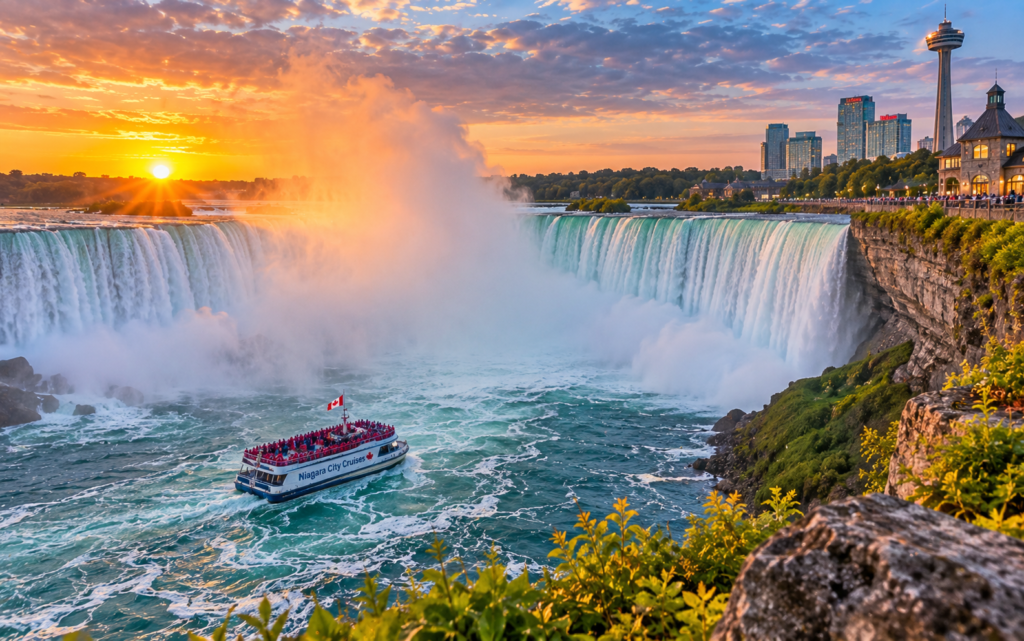
Niagara Falls, Ontario
Go early if you want the Falls without the worst crowds. Niagara Falls is easy to reach from Toronto, which is why it works so well as the first major stop on an Eastern Canada itinerary.
The Canadian side gives you direct views of all three waterfalls, including the broad sweep of Horseshoe Falls. The free public viewpoints are enough to appreciate the scale.
I would add a boat trip only if getting close to the Falls is important to you.
The current Niagara City Cruises experience is the Canadian-side boat option, while Journey Behind the Falls takes you into viewing areas beside and behind Horseshoe Falls. Niagara Parks currently lists Niagara City Cruises adult admission from C$47.95 plus tax, although prices vary by date and ticket type. (Niagara Parks)
- Location: Niagara Falls, Ontario
- Best time: Summer for boat tours; early morning or evening for fewer crowds
- Suggested time: Half a day for the Falls alone; a full day if adding a boat tour and nearby stops
- Visitor count: Niagara Falls attracts millions of visitors annually; exact totals vary depending on whether the source counts the city, attraction area, or tourism region
- Key tip: Start at the Falls early, then work your way along the Niagara Parkway
Budget alternative: Walk the public viewpoints along the Niagara Parkway and around Table Rock. You can get excellent views without paying for an observation deck or boat.
If you have only a few hours, spend the money on the experience you actually want rather than buying several overlapping viewpoints.
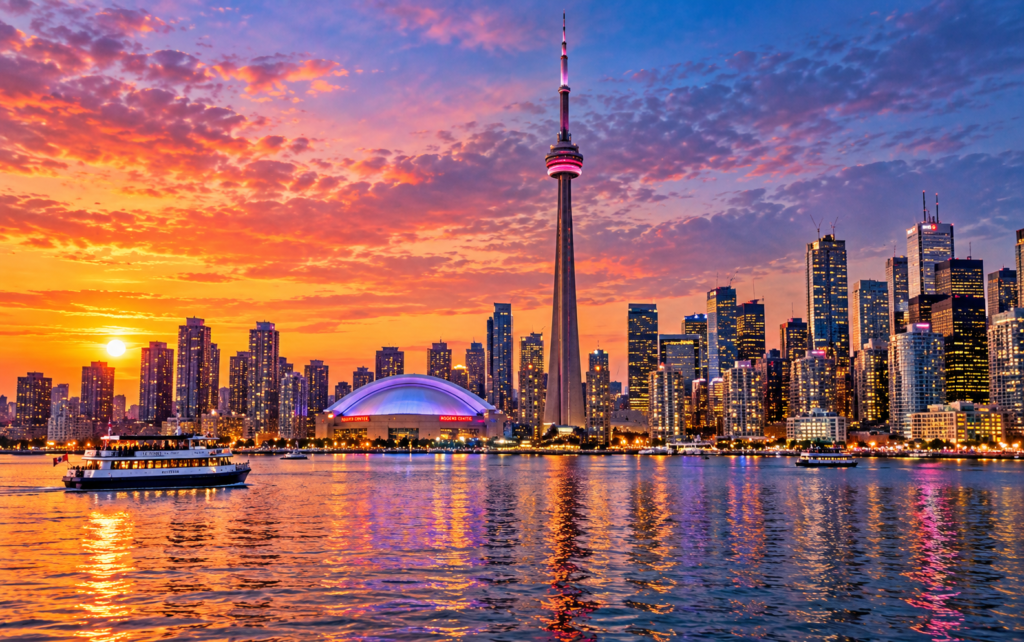
CN Tower, Toronto, Ontario
Book around sunset if you are going up the tower. That gives you three different views of Toronto in one visit: daylight, golden hour, and the city after dark.
The CN Tower is one of Toronto’s most recognizable landmarks and works particularly well after a day exploring the waterfront or downtown.
Current general admission starts at C$47 for adults, with timed tickets available through the official CN Tower website. The observation levels are currently open from morning into late evening, although operating hours can change. (CN Tower)
Allow a couple of hours rather than treating it as a 30-minute photo stop. Queues, elevators, photographs, and time at the observation levels all add up.
- Location: Toronto, Ontario
- Best time: Late afternoon into sunset
- Suggested time: 2–3 hours
- Key tip: Book a timed sunset slot and combine it with the waterfront
Budget alternative: Skip the paid observation deck and explore the Toronto waterfront, Harbourfront, or Toronto Islands for skyline views. You will not get the same elevated perspective, but you can photograph the CN Tower from different angles without paying an admission fee.
If you plan to visit several paid Toronto attractions, compare the cost of individual tickets with Toronto CityPASS before booking. A pass only makes financial sense when its included attractions match your actual itinerary.
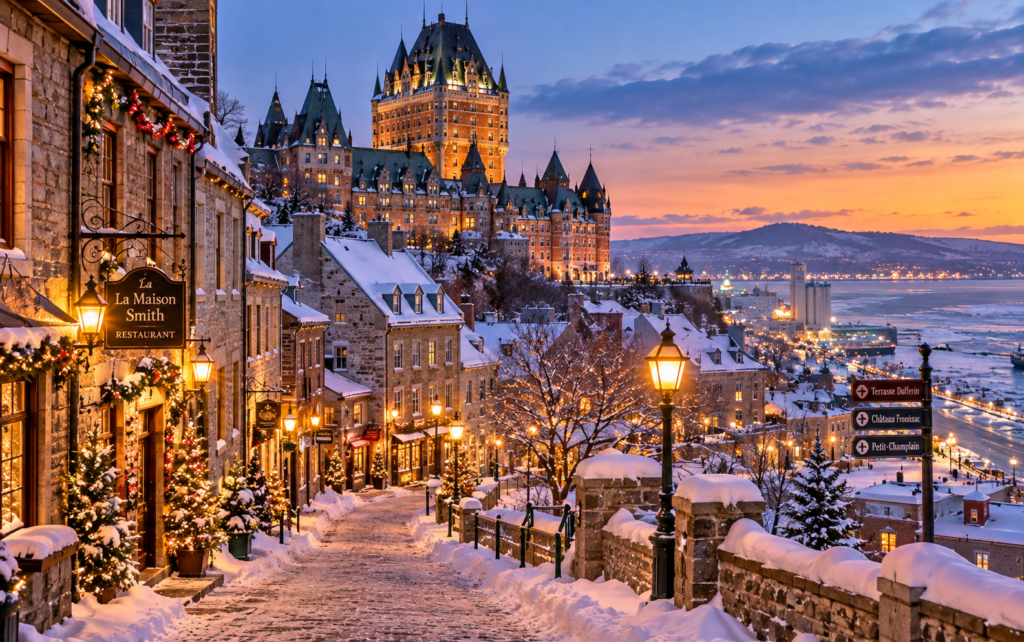
Old Québec City, Québec
Stay overnight if you can. Old Québec is much better experienced on foot than as a quick daytime stop between trains.
The fortified historic district includes Upper Town, Lower Town, Château Frontenac, Dufferin Terrace, Petit-Champlain, Place Royale, and the old defensive walls.
Summer is the easiest season for long walking days and outdoor dining. Winter changes the experience completely, with snow, seasonal decorations, and events such as the Québec Winter Carnival.
I would allow at least one full day, but two days gives you a much better pace.
The official Québec City tourism office publishes a dedicated 48-hour itinerary, which is a useful indication of how much there is to cover without rushing. (Québec City Tourism)
- Location: Québec City, Québec
- Best time: Summer for walking and outdoor activity; winter for snow and seasonal events
- Suggested time: 1–2 days
- Key tip: Stay inside or close to the historic district if budget allows
Budget alternative: You can spend most of a day here without paying an entrance fee. Walk the fortified streets, Dufferin Terrace, Petit-Champlain, Place Royale, and the Plains of Abraham.
Paid museums, the funicular, and other attractions can then be added selectively.
Winter festival dates are particularly important for accommodation planning. If you are travelling during the Québec Winter Carnival or another major event, book well ahead rather than expecting to find a convenient hotel at the last minute.
For a car-free Eastern Canada itinerary, VIA Rail provides service between Montréal and Québec City, with broader rail connections linking Toronto and Montréal. Check the current schedule before fixing your hotel dates. (VIA Rail)
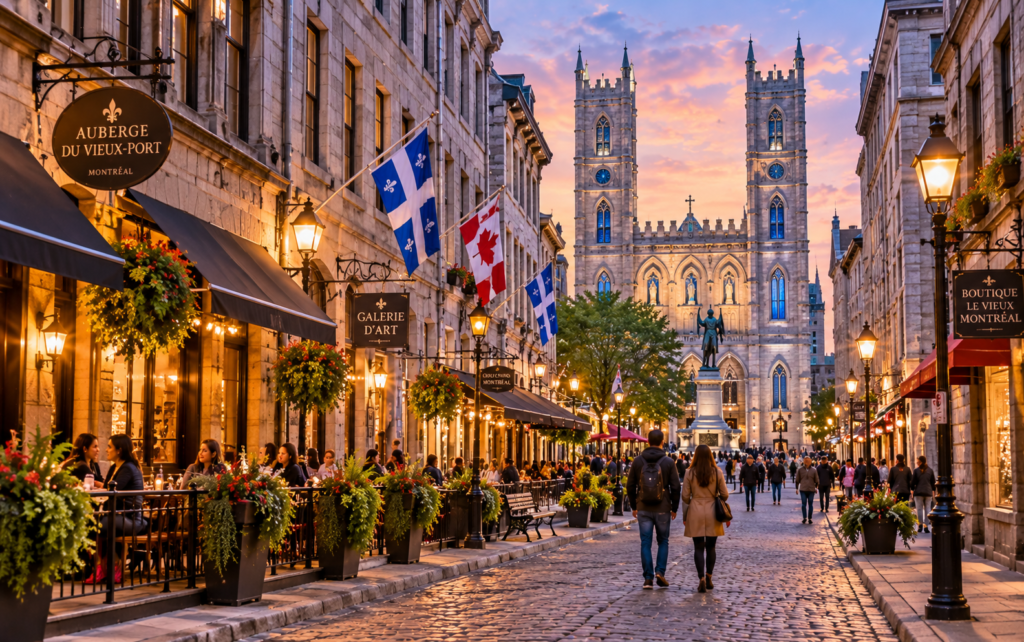
Montréal, Québec
Give Montréal at least two days. It is large enough to reward a slower visit, but compact enough that you can combine several neighborhoods without spending your whole day in transit.
Montréal fits naturally between Toronto and Québec City on an Eastern Canada route. Old Montréal gives you historic streets and waterfront architecture, while Mount Royal provides one of the easiest free viewpoints over the city.
Summer is the better choice if you want festivals, outdoor events, terraces, and long walking days. Winter is colder, but the city continues operating with seasonal markets and indoor attractions.
- Location: Montréal, Québec
- Best time: Summer for festivals and outdoor activities; winter for seasonal events and indoor attractions
- Suggested time: 2–3 days
- Key tip: Consider a city pass only if you plan to visit several paid attractions
Budget alternative: Walk Old Montréal, the Old Port, and Mount Royal without paying an admission fee. The Mount Royal lookout is particularly useful if you want a city panorama without booking an observation deck.
If you plan to visit several museums and attractions, compare individual admission prices with the current Passeport MTL before buying. The pass is useful only when the included attractions match your plans. (Montréal Tourism)
For a car-free itinerary, VIA Rail connects Montréal with Québec City and Toronto. Check current departure times before booking accommodation around a particular train. (VIA Rail)
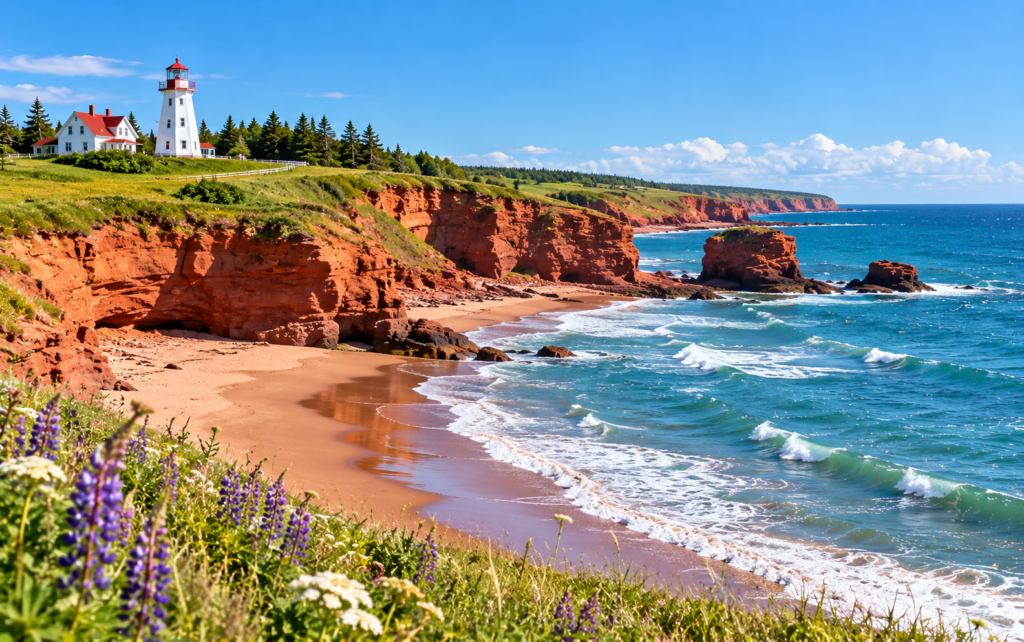
Prince Edward Island
Treat PEI as an Atlantic Canada extension, not a quick stop. The island is worth adding when you have several extra days and want beaches, coastal scenery, seafood, and smaller communities after the larger cities.
Summer is the obvious season. Days are longer, beaches are usable, and most seasonal attractions and businesses are operating.
The best way to see the island is by car. That gives you the flexibility to follow the coast, stop at beaches, and change plans when a viewpoint or small town catches your attention.
Prince Edward Island National Park stretches along the island’s north coast and includes beaches, dunes, trails, and coastal scenery. Tourism PEI confirms that walking on PEI beaches is generally free, while individual attractions and services may charge separately. (Tourism PEI)
- Location: Prince Edward Island
- Best time: Summer for beaches and coastal drives
- Suggested time: 2–4 days
- Key tip: Rent a car and build your itinerary around coastal routes rather than one central attraction
Budget alternative: Beaches, coastal viewpoints, and many scenic drives can be enjoyed without an attraction ticket. Save your budget for selected museums, food experiences, or activities that interest you.
Do not add PEI to a seven-day Toronto–Québec City itinerary just to say you visited the island. The additional flight or long drive needs to be worth the time you lose elsewhere.
Western Canada: Banff, Jasper, Vancouver, and Victoria
This is the route to choose if mountains and outdoor scenery matter more to you than Canada’s eastern cities.
The practical sequence is Vancouver → Victoria → Banff → Jasper, although you can reverse it depending on flights.
The key connection is the Icefields Parkway between Banff and Jasper. Do not treat it simply as transportation. The highway passes through some of the Rockies’ most visited scenery, so allow time for stops rather than calculating the drive as a point-to-point transfer.
Then use Vancouver and Vancouver Island as the coastal section.
Banff National Park, Alberta
Give Banff several days and book the busy lakes before you arrive. This is not a park where I would leave the major logistics until the morning of your visit.
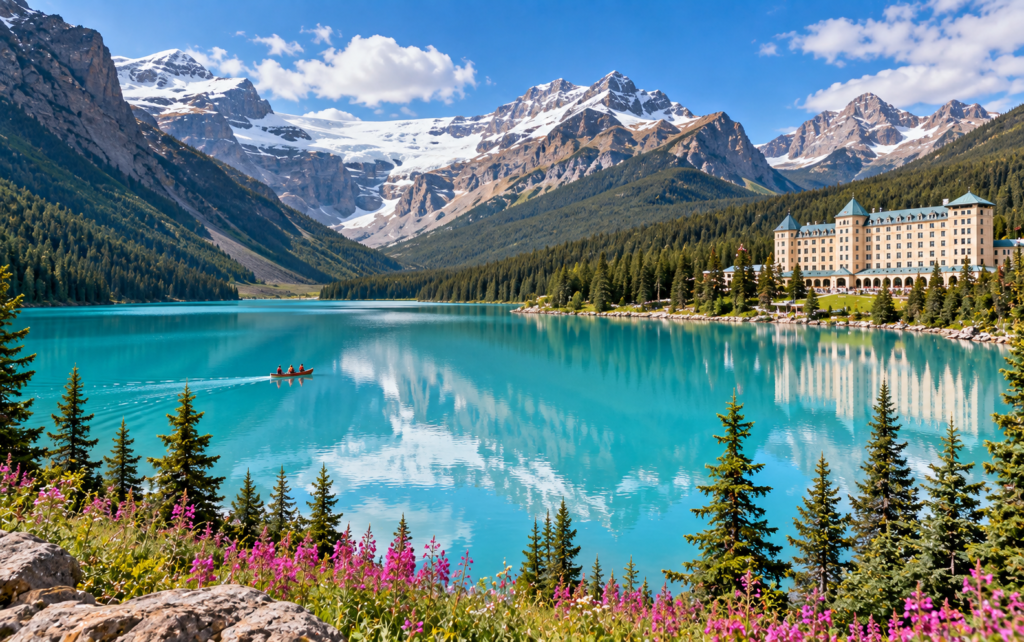
Banff National Park is Canada’s oldest national park and one of its busiest. Lake Louise and Moraine Lake receive much of the attention, but the park also gives you access to hiking, wildlife viewing, mountain drives, hot springs, and the route toward Jasper.
Summer is the obvious season for hiking and turquoise mountain lakes. Winter changes the itinerary completely, with skiing, snowshoeing, frozen lakes, and winter road conditions.
The biggest mistake is assuming you can simply drive to Lake Louise or Moraine Lake whenever you want.
For 2026, Parks Canada operates reservation-based shuttle services to these popular destinations. The Lake Louise shuttle season is scheduled from May 15 to October 12, while Moraine Lake shuttle service is scheduled from June 1 to October 12, weather permitting. Moraine Lake Road is closed to personal vehicles year-round. (Parks Canada)
- Location: Banff National Park, Alberta
- Best time: Summer for lakes and hiking; winter for skiing and snow activities
- Suggested time: 3–4 days
- Key tip: Reserve Lake Louise and Moraine Lake transportation before your trip
Budget alternative: You do not need to pay for a separate attraction ticket to photograph the major mountain scenery once you are inside the national park. Use the Parks Canada shuttle where applicable instead of paying for private transportation to the popular lakes.
You will still need to account for the applicable Parks Canada admission or pass.
If you plan to visit several national parks during the same trip, compare the cost of individual daily admissions with the Parks Canada Discovery Pass before buying.
And go early.
For Lake Louise in particular, an early start makes the entire day easier, whether you are hiking, photographing the lake, or connecting to another trail.
Jasper National Park, Alberta
Keep Jasper on the itinerary, but check current access before you book non-refundable plans. Jasper is quieter than Banff in many areas, but the difference is not simply about crowds. The park is still dealing with the effects of the 2024 Jasper wildfire, and access conditions can change as recovery work continues.
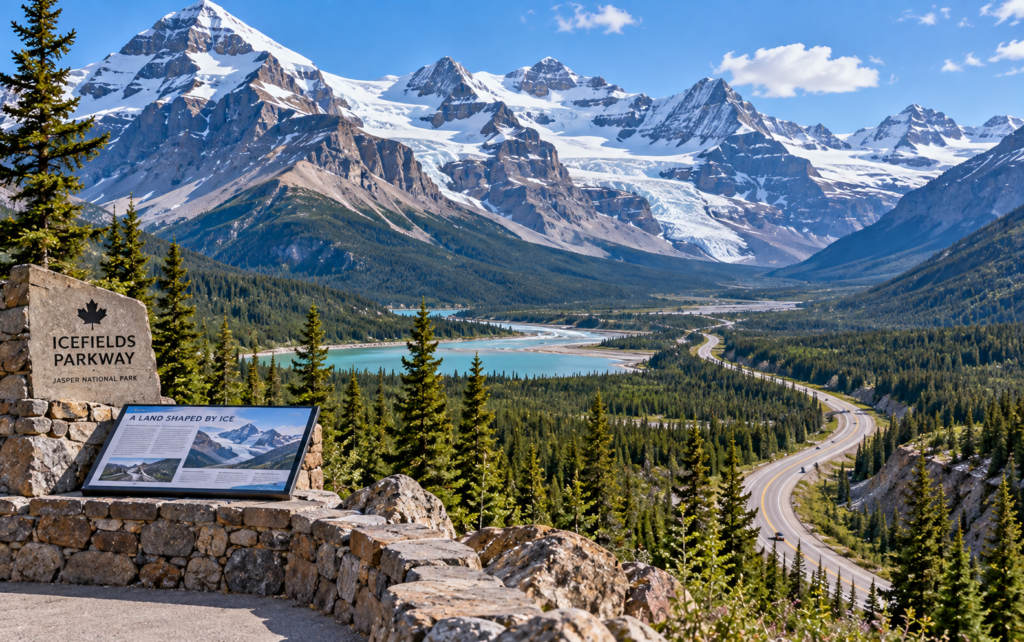
The best way to experience Jasper is to combine it with Banff via the Icefields Parkway. The highway is one of the main reasons to make this journey. Plan stops rather than treating it as a straight transfer.
The Icefields Parkway runs between Lake Louise and Jasper and gives you access to viewpoints, glaciers, lakes, waterfalls, and mountain valleys. Weather can change quickly, so keep your schedule flexible.
Parks Canada reported that virtually all Jasper trails had reopened by 2026, although some restrictions and closures remained during the recovery period. Current bulletins and the park’s interactive map should be checked immediately before travelling. (Parks Canada)
- Location: Jasper National Park, Alberta
- Best time: Summer for the widest range of accessible activities; always check current conditions
- Suggested time: 2–3 days, including time for the Icefields Parkway
- Key tip: Check Jasper’s current closures, trail conditions, wildfire recovery notices, and road status before departure
Budget alternative: Make the Icefields Parkway itself the attraction. The highway’s viewpoints and roadside stops provide plenty to see without booking a separate paid excursion.
You will still need the applicable Parks Canada admission or pass to enter the national park.
A Discovery Pass can make sense if Jasper and Banff are part of a longer national-park road trip. For individual hikes, use current Parks Canada trail information rather than relying on old AllTrails descriptions.
Stanley Park & Vancouver, British Columbia
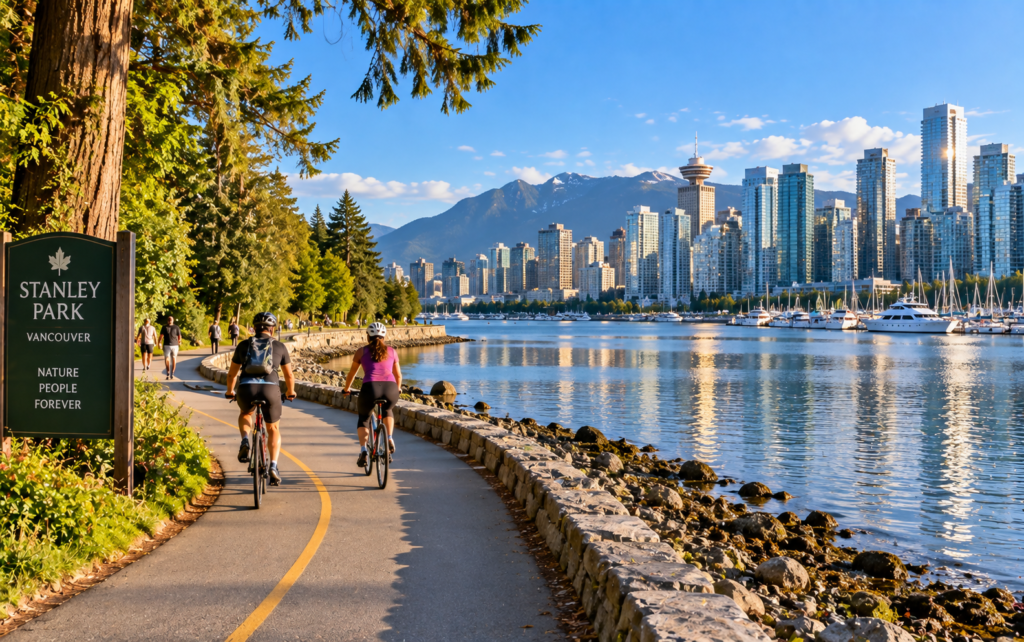
Use Stanley Park as your free starting point in Vancouver. You can spend several hours walking or cycling around the seawall without paying an attraction admission fee, then decide whether the city’s paid attractions are worth adding.
Stanley Park sits directly beside downtown Vancouver, so it is easy to combine with the waterfront, Coal Harbour, Gastown, or other central neighborhoods.
The seawall is the obvious route, but do not rush through the park simply to complete the loop. Stop at viewpoints, beaches, forest paths, and the areas around Brockton Point.
Summer gives you the best conditions for beaches and cycling, but Vancouver works year-round. Expect rain in the cooler months and plan indoor alternatives accordingly.
- Location: Vancouver, British Columbia
- Best time: Year-round; summer for beaches, cycling, and outdoor activities
- Suggested time: Half a day for Stanley Park; 1–2 days for Stanley Park plus wider Vancouver
- Key tip: Start with the free park and seawall before paying for additional attractions
Budget alternative: Stanley Park, its public paths, beaches, and seawall are free. A walking day around Stanley Park and downtown can cost little beyond food and local transportation.
If you want a paid mountain or suspension-bridge experience, compare the total cost before buying a sightseeing pass. Grouse Mountain and Capilano Suspension Bridge are separate paid experiences, so do not add both automatically just because they appear on the same attraction list.
For a longer Vancouver stay, compare individual admission prices with any current city-pass offer before purchasing.
Victoria & Vancouver Island, British Columbia
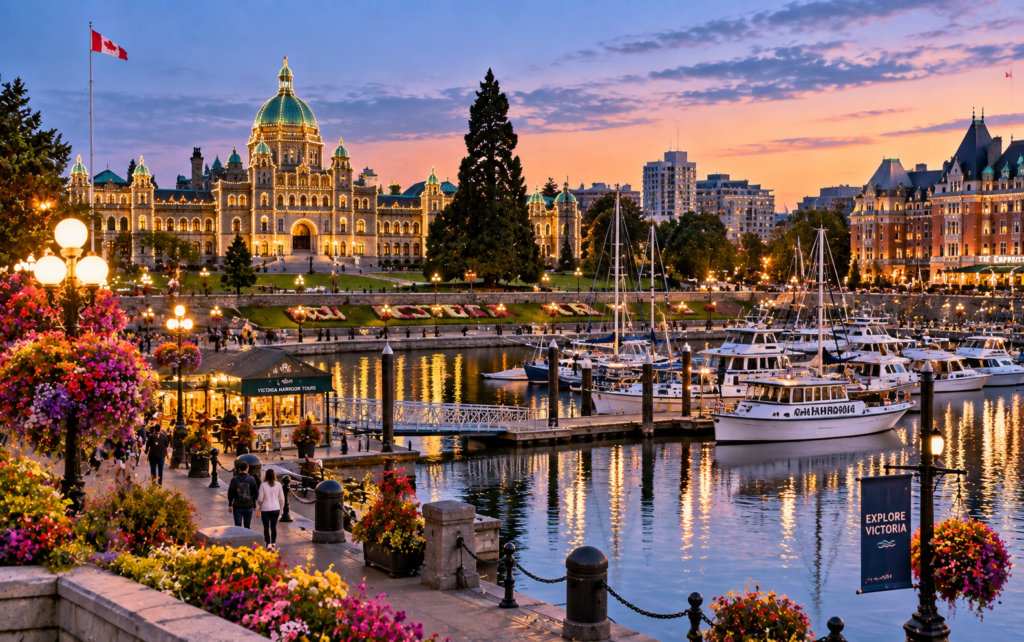
Give Victoria at least one overnight if you want more than the harbour. A day trip from Vancouver is possible, but the ferry journey, transfer time, and return trip leave less time than the map suggests.
Victoria provides a slower contrast to Vancouver. The Inner Harbour is easy to explore on foot, while Beacon Hill Park and the city’s historic streets can fill much of a relaxed day.
If you add Butchart Gardens or a whale-watching excursion, an overnight becomes much more practical.
Summer is the easiest season for gardens, walking, and whale watching, but Vancouver Island is not limited to summer travel.
The main planning issue is transportation. BC Ferries recommends reservations for vehicles and advises passengers to check current sailing information before travelling. (BC Ferries)
- Location: Victoria, Vancouver Island, British Columbia
- Best time: Summer for gardens, outdoor sightseeing, and whale watching
- Suggested time: 1 full day at minimum; 2–3 days if adding gardens and whale watching
- Key tip: Reserve ferry travel ahead during busy periods, especially if taking a vehicle
Budget alternative: Walk the Inner Harbour and explore Beacon Hill Park without paying an attraction admission fee. Save the budget for one paid experience that actually interests you, such as Butchart Gardens or whale watching.
Do not underestimate the ferry logistics. A day trip can work, but you need to build the itinerary around the sailing schedule rather than treating the ferry as a short local transfer.
Northern Canada: Whitehorse and the Northern Lights
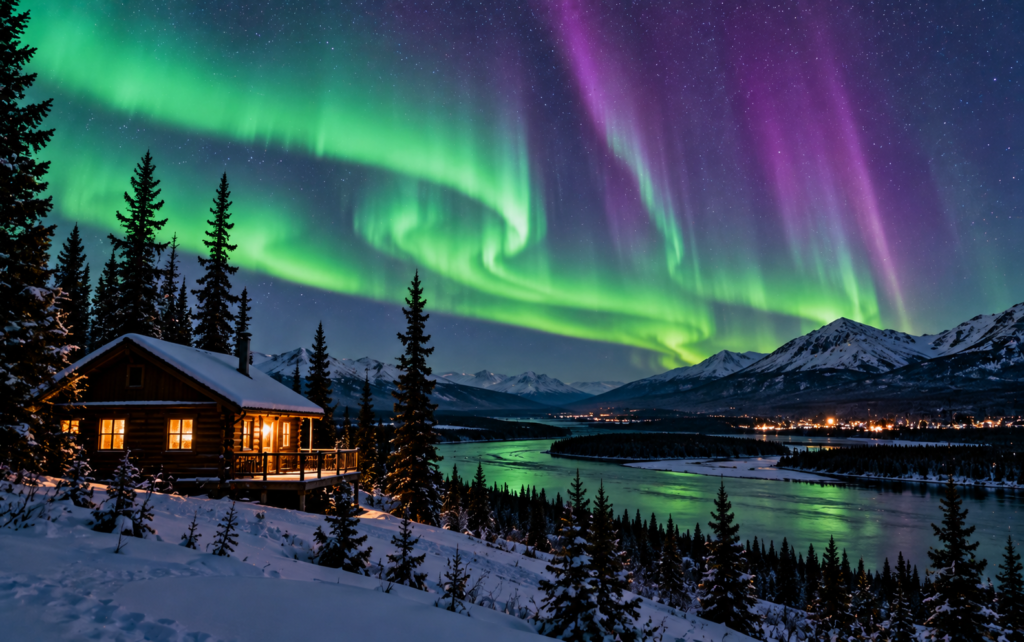
Add Whitehorse only if the northern lights are a priority. It does not fit neatly into a standard Toronto–Vancouver itinerary, so treat it as a separate northern extension rather than trying to squeeze it into a short Canada trip.
Whitehorse is the Yukon’s main urban base and a practical starting point for aurora viewing. The season generally runs from late August through mid-April, with the darkest winter months offering long viewing windows.
Clear skies matter as much as the aurora forecast.
I would stay at least three nights. A longer stay gives you more opportunities to deal with cloud cover, poor weather, or a weak aurora forecast. Yukon tourism also recommends giving yourself several nights rather than relying on a single evening. (Travel Yukon)
- Location: Whitehorse, Yukon
- Best time: Late August through April for northern lights
- Suggested time: At least 3 nights
- Key tip: Prioritize clear skies and darkness over a specific date
Budget alternative: You do not necessarily need an expensive viewing package. If you have suitable transportation and know where legal public access is available, you can look for darker skies outside central Whitehorse and monitor the forecast yourself.
However, organized tours can solve the practical problems of transportation, warm shelter, and knowing where to go. In winter, those conveniences can be worth paying for.
Do not promise yourself a guaranteed aurora. No operator can control cloud cover or solar activity.
If wildlife is your main reason for travelling north, Churchill, Manitoba is another option, particularly during polar bear season. Treat it as a separate trip rather than an extension of this Whitehorse itinerary because the logistics and costs are considerably different.
Free Viewpoints & Budget Alternatives for Every Attraction
You do not need to pay for every major Canadian attraction to have a good trip. Some of the country’s best views are accessible from public parks, waterfronts, roads, and hiking trails. The smarter approach is to pay for experiences that genuinely change what you see and use free viewpoints for the rest.
I use this approach whenever an attraction has both a paid and free version. If the paid ticket gives you a completely different experience, it can be worth the money. If it simply gives you another viewing platform, I would usually keep the money for food, transport, or another activity.
Here is the quick budget list:
- Niagara Falls: Walk the Niagara Parkway and public Falls viewpoints. Pay for a boat tour if you want to get close to the water rather than simply see it.
- CN Tower, Toronto: Use the Toronto waterfront or Toronto Islands for skyline views without paying observation-deck admission.
- Old Québec City: Walk the fortified old town, Dufferin Terrace, and Plains of Abraham for free.
- Montréal: Explore Old Montréal, the Old Port, and Mount Royal without an attraction ticket.
- Prince Edward Island: Beaches, coastal roads, and many scenic stops are free. Pay only for selected attractions.
- Banff National Park: Use Parks Canada transportation for restricted lake access and spend your time at public viewpoints and trails rather than stacking expensive excursions.
- Jasper National Park: Make the Icefields Parkway part of the experience. Pull-offs and roadside viewpoints provide some of the best scenery without a separate attraction fee.
- Stanley Park & Vancouver: Walk or cycle the seawall, explore the forest trails, and visit the beaches without paying admission.
- Victoria: Walk the Inner Harbour and explore Beacon Hill Park before spending money on gardens or tours.
- Whitehorse: Look for suitable dark-sky viewing locations and use an aurora forecast before paying for a viewing excursion.
How to keep the overall trip affordable
Choose paid experiences selectively. Canada gets expensive when you combine attraction tickets, rental cars, hotels, tours, and restaurant meals every day.
A better approach is to alternate.
Spend money on a Niagara boat tour, a Banff excursion, or an aurora tour if that experience matters to you. Then make the following day a free walking, hiking, or sightseeing day.
City passes can also help, but only when you actually plan to visit enough included attractions. Do the math first.
The biggest saving is often route planning rather than ticket hunting. If you spend half a day crossing a province because two attractions were poorly grouped, a cheap ticket has not saved you much.
For a first trip, I would prioritize one regional loop and leave the rest for another visit. Canada is too large to turn into a checklist race.
Practical Logistics: Passes, Reservations, and 2026 Closures
Book the high-demand attractions first. Canada gives you plenty of flexibility, but the busiest parks and seasonal experiences do not always work well with last-minute planning.
The main things I would lock in early are Lake Louise and Moraine Lake transportation, accommodation in Banff and Jasper, popular Niagara experiences, and any northern-lights tour or accommodation you specifically want.
Parks Canada Passes
If your itinerary includes Banff, Jasper, Prince Edward Island National Park, or other Parks Canada sites, compare individual admission fees with the Parks Canada Discovery Pass.
The Discovery Pass provides admission to more than 80 Parks Canada destinations for 12 months. It can make sense for a multi-park road trip, but do the calculation based on your actual itinerary rather than assuming it is automatically cheaper. Parks Canada notes that regular admission fees apply outside its temporary free-admission periods. (Parks Canada)
The pass does not replace separate reservations or activity fees. For example, a national park entry pass does not include the Parks Canada shuttle reservation required for Lake Louise and Moraine Lake. (Parks Canada)
Lake Louise and Moraine Lake
Do not leave these two lakes to chance in summer.
For 2026, Parks Canada requires reservations for its shuttles to Lake Louise and Moraine Lake. The 2026 reservation launch was April 15, with additional seats released two days before departure. Moraine Lake Road is closed to personal vehicles year-round. (Parks Canada)
The scheduled 2026 operating periods are:
- Lake Louise: May 15–October 12
- Moraine Lake: June 1–October 12, weather permitting
- Lake Connector: June 1–October 12
If you want to see both lakes in one day, the Parks Canada shuttle is one of the simplest options. Do not assume you can arrive at sunrise and find a parking space.
Jasper After the 2024 Wildfire
Check Jasper’s official status immediately before your trip.
The 2024 wildfire affected parts of Jasper National Park, but the situation is not as simple as saying the park is closed. Parks Canada reports that virtually all Jasper trails had reopened by 2026, while some wildfire-affected areas and facilities continued to have restrictions or recovery work. (Parks Canada)
For example, Parks Canada has continued to publish area-specific closures and recovery notices affecting places such as Edith Cavell and Maligne Canyon. These conditions can change, so an old itinerary or travel blog is not enough. (Parks Canada)
Check the official Jasper bulletins and trail information shortly before departure.
Other Reservations Worth Making Early
- Niagara Falls: Go early morning or later in the day if you want fewer tour-bus crowds. Add the boat tour or Journey Behind the Falls only if you want a paid close-up experience.
- CN Tower: A timed sunset ticket is useful if you want daylight, golden hour, and Toronto’s night skyline in one visit.
- Québec City: Winter festival dates can fill hotels quickly. Book accommodation well ahead if your dates overlap major events.
- Banff: Reserve Lake Louise and Moraine Lake transportation before your trip.
- Whitehorse: If seeing the northern lights is the main purpose of your trip, stay several nights rather than relying on one viewing opportunity.
- Mountain parks: Check road conditions before setting out, particularly during shoulder seasons and winter.
For northern lights, Yukon officially identifies mid-August through mid-April as the viewing season, with dark and clear conditions being particularly important. The commonly recommended viewing window is roughly 10 p.m. to 3 a.m. (Travel Yukon)
Useful Planning Tools
A few resources can make the trip easier:
- Parks Canada: Park fees, reservations, trail conditions, closures, and shuttle information.
- VIA Rail: Useful for connecting Toronto, Montréal, and Québec City without a rental car.
- Rocky Mountaineer: A scenic rail option for travellers who want the train journey itself to be part of the Western Canada experience.
- Niagara City Cruises / Journey Behind the Falls: The main paid Niagara experiences to compare before booking.
- Parks Canada and AllTrails: Useful for checking hiking routes, although official Parks Canada closure information should take priority.
- Aurora forecast apps: Useful for Whitehorse and Yellowknife, but treat forecasts as guidance rather than guarantees.
- Travel insurance comparison sites: Worth checking for multi-city trips, especially when your itinerary involves rental cars, mountain activities, remote areas, or cross-border travel.
If you have several extra days in Atlantic Canada, Gros Morne National Park in Newfoundland and Labrador is another Parks Canada option worth researching. It should be treated as an additional Newfoundland itinerary rather than something to squeeze into a short Eastern Canada loop.
If You Only Have One Week: Mini-Itinerary
Do not try to cover both coasts in seven days. Pick one region and accept that you will see only part of Canada.
Option A: Eastern Canada
Toronto → Niagara Falls → Québec City → Montréal
A practical seven-day structure could look like this:
- Days 1–2: Toronto, including the CN Tower and waterfront
- Day 3: Niagara Falls
- Days 4–5: Québec City
- Days 6–7: Montréal
This gives you a mix of city sightseeing, a major natural attraction, historic districts, food, and museums without spending every day travelling.
I would leave Prince Edward Island for another trip. Adding it here turns a manageable itinerary into a series of flights and transfers.
Option B: Western Canada Rockies
Calgary → Banff → Icefields Parkway → Jasper
If mountains are your priority, this is the cleaner choice.
- Day 1: Calgary and transfer to Banff
- Days 2–3: Banff and Lake Louise
- Day 4: Icefields Parkway
- Days 5–6: Jasper
- Day 7: Return travel
If you also want Vancouver and Victoria, I would not pretend that this is the same seven-day itinerary. Add several days or save the coast for another trip.
Choose by Season
Winter: Québec City works particularly well for winter events, while Banff and Jasper offer skiing and other snow activities.
Summer: The Rockies are easier for hiking and lake access, while Vancouver and Vancouver Island are strong choices for outdoor activities.
Late August to April: Consider Whitehorse or Yellowknife if the northern lights are the main reason for your trip. Yukon confirms that aurora viewing is possible from mid-August through mid-April, but clear skies and solar activity still determine what you actually see. (Travel Yukon)
The practical rule is simple: choose the route first, then choose the attractions.
That one decision will save more time than trying to optimize every individual ticket.
Printable Checklist of the 10 Attractions
Use this checklist while planning your Canada trip. Check each attraction when you have either added it to your itinerary or completed the visit.
Canada Attractions Checklist
- ☐ Niagara Falls, Ontario
- ☐ CN Tower, Toronto, Ontario
- ☐ Old Québec City, Québec
- ☐ Montréal, Québec
- ☐ Prince Edward Island
- ☐ Banff National Park, Alberta
- ☐ Jasper National Park, Alberta
- ☐ Stanley Park & Vancouver, British Columbia
- ☐ Victoria & Vancouver Island, British Columbia
- ☐ Whitehorse & Northern Lights, Yukon
Before You Leave
- ☐ Choose one regional route
- ☐ Check seasonal road conditions
- ☐ Reserve Lake Louise transportation
- ☐ Reserve Moraine Lake transportation
- ☐ Check current Jasper National Park closures
- ☐ Compare Parks Canada admission with the Discovery Pass
- ☐ Book accommodation in busy summer and festival periods
- ☐ Reserve ferries if travelling to Vancouver Island
- ☐ Check northern lights forecasts for Whitehorse
- ☐ Download offline maps and important travel apps
- ☐ Check travel insurance coverage
Print this section or save it to your phone and tick off each stop as you go.
Conclusion: Your Starter Canada Itinerary
Canada is too large to approach as one giant sightseeing list.
Choose one loop first.
For cities, history, food, and Niagara Falls, take the Eastern Canada route through Toronto, Niagara Falls, Montréal, and Québec City. Add Prince Edward Island only if you have enough time for an Atlantic extension.
For mountains, lakes, hiking, and coastal British Columbia, choose the Western Canada route. Start around Calgary, explore Banff and Jasper via the Icefields Parkway, then continue toward Vancouver and Victoria if your schedule allows.
If you only have a week, do not try to combine both.
Before booking, check the latest Jasper National Park conditions, reserve your Lake Louise and Moraine Lake transportation, and compare the Parks Canada Discovery Pass with individual park admission if several national parks are on your itinerary.
Then build the trip around the season.
Summer favors the Rockies, Vancouver, Vancouver Island, and PEI. Winter gives Québec City a completely different character and opens up skiing in the mountain parks. Late summer through spring is the window to consider if northern lights are your priority.
Canada rewards slower routes.
Pick the region that fits your interests, allow enough time between stops, and use the checklist to keep the planning manageable.
Sources, Author Experience & Last Updated
Last updated: September 21, 2026
Travel information changes frequently. Park closures, shuttle reservations, attraction hours, admission prices, ferry schedules, and seasonal road conditions can change during the year. Check the relevant official source immediately before travelling.
For national parks, reservations, closures, and admission information, use Parks Canada as the primary reference.
For national tourism information and destination planning, use Destination Canada.
For rail travel between major Eastern Canadian cities, check VIA Rail. For Western scenic rail travel, check Rocky Mountaineer.
For Niagara experiences, use Niagara Parks and the official attraction information rather than relying on reseller listings.
For Vancouver Island ferry planning, check BC Ferries before setting your travel schedule.
For Yukon aurora planning and seasonal information, use Travel Yukon.
Accuracy Note
Visitor numbers and tourism statistics should be attributed to the organization and reporting period used. Older annual figures should not be presented as current 2026 visitor counts.
For current 2026 logistics, prioritize official park, attraction, transport, and tourism sources over older travel blogs. Third-party sites such as U.S. News Travel and Lonely Planet can provide useful destination context, but current closures, prices, reservations, and operating schedules should be verified through the relevant official provider.