

Egypt is one of those destinations where history is not confined to museums. It is built into the landscape, standing beside the Nile, rising from the desert and appearing in the streets of cities that have been shaped by thousands of years of civilization.
For travelers searching for the best tourist attractions in Egypt, the country offers an impressive mix of ancient monuments, historic cities, temples, museums, Mediterranean culture and Red Sea beaches.
The famous pyramids may be what first comes to mind but there is much more to discover beyond Giza. From Cairo and Luxor to Aswan and the Red Sea coast, these ten attractions provide a great introduction to Egypt.
1. The Pyramids of Giza
No list of tourist attractions in Egypt would be complete without the Pyramids of Giza.
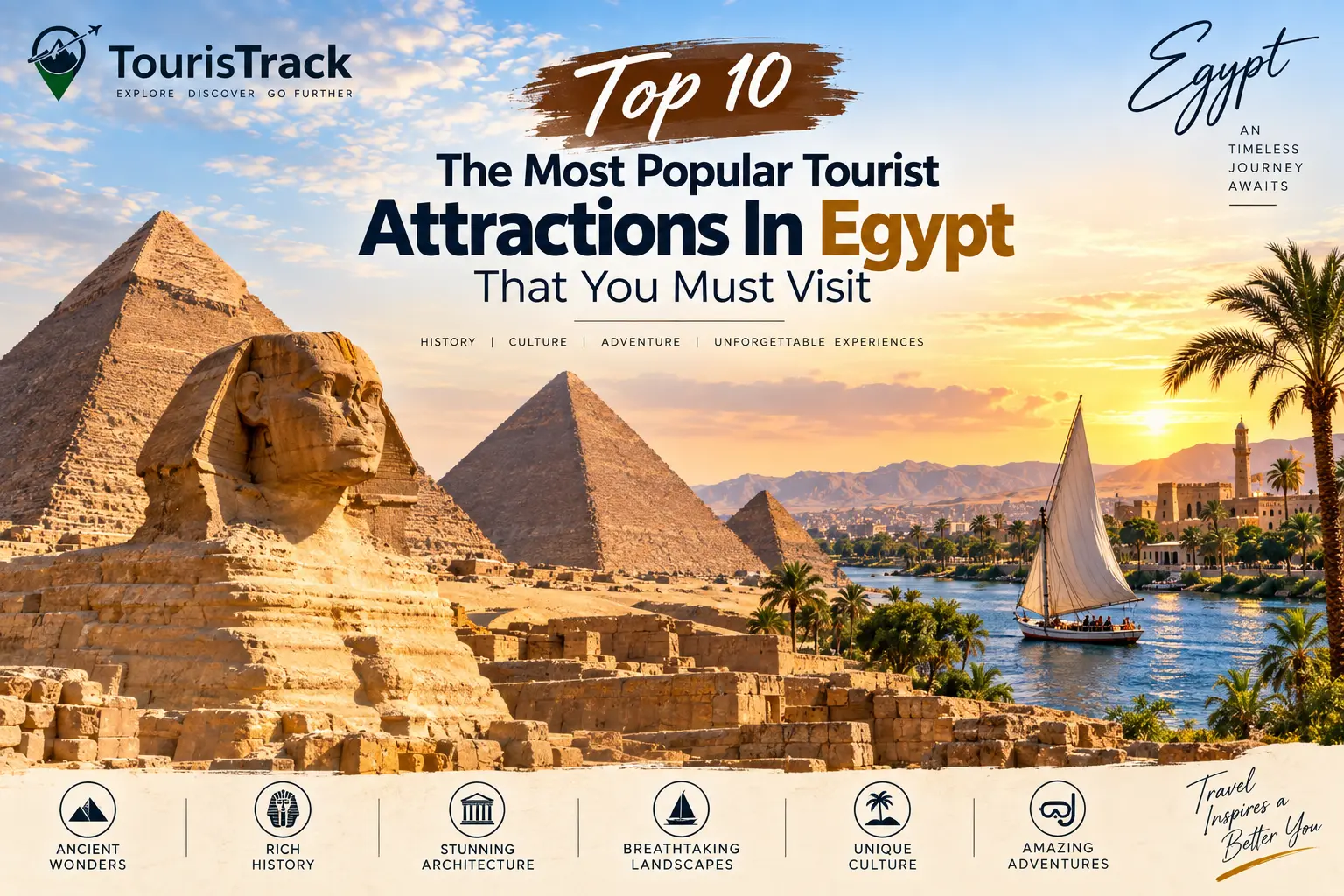
Located on the outskirts of Cairo, the Giza Plateau contains the Great Pyramid of Khufu, the pyramids of Khafre and Menkaure, and the famous Great Sphinx. The pyramid fields from Giza to Dahshur form part of a UNESCO World Heritage property known as Memphis and its Necropolis. (whc.unesco.org)
The Great Pyramid is particularly remarkable because it is the only surviving monument traditionally included among the Seven Wonders of the Ancient World.
Standing in front of the pyramids gives travelers a sense of scale that photographs simply cannot reproduce. The enormous stone structures have survived for thousands of years, making them one of the world’s most recognizable landmarks.
Take time to explore the plateau rather than simply stopping for a photograph. The surrounding desert, ancient monuments, and views across the Giza landscape all contribute to the experience.
For a first trip to Egypt, Giza is an obvious place to begin.
2. The Egyptian Museum in Cairo
If you want to understand more about the civilization behind Egypt’s monuments, spend time in Cairo’s museums.
The Egyptian Museum has long been one of the city’s best-known places for exploring ancient Egyptian history, with extensive collections of antiquities spanning different periods of the civilization.
A museum visit adds context to the monuments you see elsewhere. Statues, jewelry, funerary objects, sculptures, and other artifacts help explain the beliefs, craftsmanship, and daily life of ancient Egypt.
The Egyptian Museum is particularly useful for travelers who want more than photographs of famous monuments. Seeing ancient objects up close can make the history behind the pyramids and temples feel much more tangible.
Cairo itself is also worth exploring beyond the museum. The city provides a fascinating contrast between modern Egyptian life and the remains of much older civilizations.
3. Karnak Temple Complex
Luxor is sometimes described as an open-air museum, and Karnak Temple Complex helps explain why.
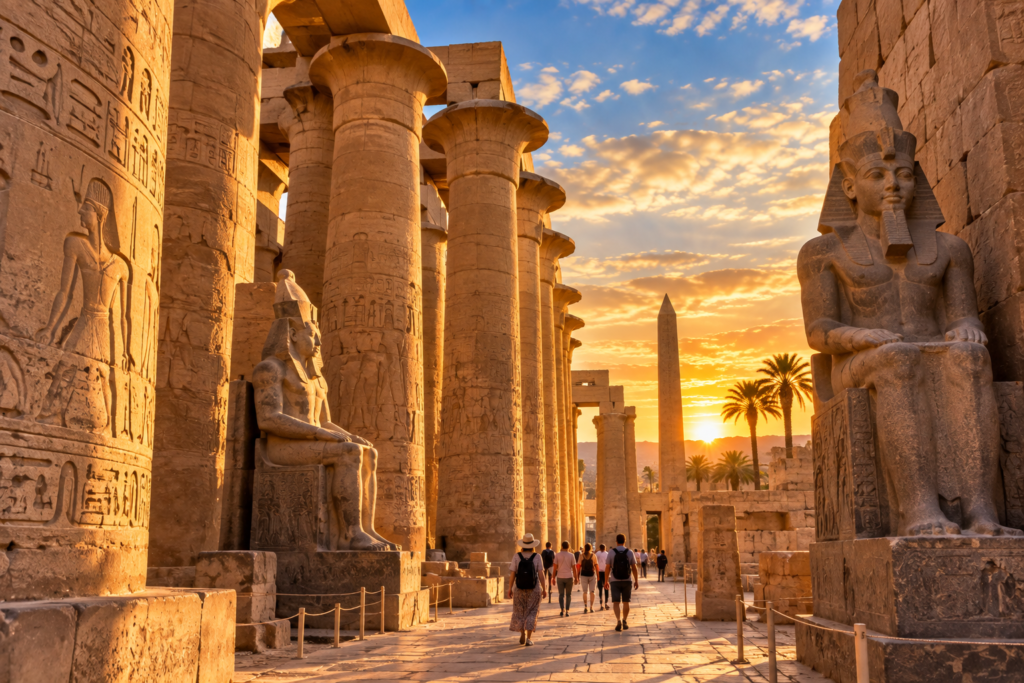
The enormous complex on the east bank of the Nile contains temples, columns, courtyards, statues, and other monuments built and expanded over many centuries.
Karnak forms part of the UNESCO World Heritage property Ancient Thebes with its Necropolis, which includes major monuments on both sides of the Nile. UNESCO describes ancient Thebes as a major religious and political center of ancient Egypt.
One of the most impressive parts of Karnak is the Great Hypostyle Hall, where huge columns create a dramatic forest of stone.
Give yourself enough time to walk through the complex rather than rushing from one landmark to another. The scale becomes much easier to appreciate when you move through its different courtyards and architectural spaces.
For travelers interested in ancient Egypt attractions, Karnak is one of Luxor’s essential stops.
4. Valley of the Kings
On Luxor’s west bank, the Valley of the Kings offers a very different experience from the monumental temples.
Instead of towering structures above ground, the attraction lies largely beneath the surrounding desert landscape. The valley contains royal tombs created for pharaohs and other important figures during ancient Egypt’s New Kingdom.
The Valley of the Kings is part of the UNESCO-listed Ancient Thebes property, alongside Karnak, Luxor Temple, and other archaeological sites.
Walking into one of the decorated tombs reveals corridors and chambers covered with detailed paintings and inscriptions.
The experience is especially memorable because the tombs were designed as places connected with the ancient Egyptians’ beliefs about death and the afterlife.
If you are visiting Luxor, combining the Valley of the Kings with Karnak and other nearby monuments provides a much fuller picture of ancient Thebes.
5. Abu Simbel Temples
Farther south, near the border with Sudan, the Abu Simbel temples offer another unforgettable example of ancient Egyptian architecture.
The monumental temples were built during the reign of Ramesses II and are famous for their enormous seated statues carved into the rock at the entrance.
The temples are part of the UNESCO World Heritage property Nubian Monuments from Abu Simbel to Philae, which includes important monuments relocated and preserved during the construction of the Aswan High Dam.
The scale of the statues is striking, but the interior is equally interesting, with decorated halls and chambers containing ancient artwork.
Abu Simbel requires more planning than attractions in Cairo or Luxor because of its southern location, but the journey can be worthwhile for travelers interested in history and monumental architecture.
Egypt’s official tourism platform also identifies Abu Simbel among the country’s major ancient Egyptian heritage attractions.
6. Historic Cairo
Egypt’s history is not limited to the pharaonic period.
Historic Cairo reveals another chapter of the country’s past, with mosques, madrasas, markets, fountains, historic streets, and traditional architecture woven into the modern city.
UNESCO recognizes Historic Cairo as a World Heritage Site and describes it as one of the world’s oldest Islamic cities, with a remarkable collection of surviving historic buildings and urban neighborhoods.
Walking through the historic districts can be one of the most rewarding things to do in Cairo. Rather than viewing history behind glass, you experience it through streets, buildings, markets, and everyday city life.
A visit to the historic area can also be paired with time at traditional markets such as Khan el-Khalili, where visitors can browse shops, crafts, spices, souvenirs, and local goods.
For travelers who want to understand Egypt beyond its ancient pyramids, Historic Cairo is an essential part of the journey.
7. Luxor Temple
Luxor Temple is another spectacular monument along the Nile and one of the highlights of visiting Luxor.
Unlike some ancient sites that feel isolated in the desert, Luxor Temple sits within the modern city, creating an interesting connection between ancient architecture and contemporary life.
The temple was dedicated to the Theban triad of Amun, Mut, and Khonsu and was connected with important religious ceremonies.
It forms part of the Ancient Thebes UNESCO World Heritage property together with Karnak and the archaeological areas on Luxor’s west bank.
The monumental entrance, columns, statues, and remaining architectural details make the temple especially impressive.
Visiting later in the day can also offer a different atmosphere as the light changes across the ancient stone.
If you are already exploring Karnak and the Valley of the Kings, Luxor Temple fits naturally into a Luxor itinerary.
8. Citadel of Cairo
The Citadel of Cairo provides another perspective on the city’s long history.
Built on a strategic hill overlooking Cairo, the historic fortress became an important center of power and defense. Today, the area is known for its historic buildings, mosques, and elevated views across parts of the city.
The Citadel is particularly interesting because it represents a period of Egyptian history far removed from the pharaohs.
Visitors can explore the complex and appreciate its architecture while also looking across the dense urban landscape of Cairo.
One of the most recognizable structures within the Citadel is the Mosque of Muhammad Ali, whose large domes and minarets have become an important part of Cairo’s skyline.
For travelers spending several days in the capital, the Citadel provides an excellent change of pace from the city’s ancient Egyptian attractions.
9. Alexandria
Alexandria offers a different side of Egypt.
Located along the Mediterranean coast, the city has a long history connected with the ancient Mediterranean world. Its location gives it a character that differs from Cairo and the archaeological destinations of Upper Egypt.
Travelers can explore the city’s waterfront, historic areas, museums, and archaeological remains while enjoying a more Mediterranean atmosphere.
Alexandria is also associated with the ancient Library of Alexandria, one of the most famous intellectual institutions of the ancient world. The modern Bibliotheca Alexandrina pays tribute to that heritage while serving as a major cultural and research center.
For visitors who want to experience places to visit in Egypt beyond the traditional pyramid-and-temple route, Alexandria offers an interesting alternative.
It can also provide a refreshing coastal break during a longer Egyptian itinerary.
10. Sharm El Sheikh and the Red Sea
Egypt is not only about ancient monuments.
On the Red Sea coast, Sharm El Sheikh is known for beaches, resorts, warm waters, and access to some of the region’s marine environments.
The area is particularly attractive to travelers interested in snorkeling, diving, boat trips, and relaxing beside the sea.
After spending several days exploring temples, tombs, museums, and archaeological sites, a few days on the Red Sea can provide a completely different experience.
The surrounding region also offers desert landscapes and opportunities for excursions beyond the coastline.
For travelers who want a combination of Egypt’s ancient history and modern beach experiences, adding the Red Sea to the itinerary can create a more balanced trip.
Which Tourist Attractions in Egypt Should You Visit?
The best places to visit in Egypt depend on what you want from your trip.
If ancient history is your priority, start with the Pyramids of Giza, Karnak, the Valley of the Kings, Luxor Temple, and Abu Simbel.
For a deeper look at the country’s urban and cultural history, spend time in Historic Cairo, the Egyptian Museum, and the Citadel.
If you want a different atmosphere, Alexandria brings Mediterranean culture and coastal history, while Sharm El Sheikh offers beaches and Red Sea experiences.
The good thing about Egypt is that these experiences can be combined. A single itinerary can take you from the pyramids of Giza to the temples of Luxor, down to Abu Simbel, and finally toward the Red Sea.
Final Thoughts
Egypt has an extraordinary ability to connect the present with the distant past.
Its most famous monuments—the pyramids, temples, tombs, and ancient cities—are only one part of the experience. The country’s museums, historic neighborhoods, Mediterranean coastline, and Red Sea resorts add completely different layers to a visit.
Egypt currently has seven properties inscribed on the UNESCO World Heritage List, including the pyramid fields from Giza to Dahshur, Ancient Thebes, Historic Cairo, and the Nubian monuments from Abu Simbel to Philae.
Whether you are fascinated by ancient civilizations, interested in culture and architecture, or simply looking for a memorable destination with plenty to explore, Egypt offers an enormous range of experiences.
The key is not trying to see everything at once. Choose the places that match your interests, give yourself enough time to experience them properly, and leave some room for the unexpected discoveries that often become the best part of a journey.