
Morocco is now firmly on the mainstream Mediterranean and North Africa travel map. The country recorded 19.8 million international tourists in 2025, up 14% from 2024. France, Spain, and the UK were the three largest source markets. Morocco also passed its original 17.5 million international-tourist target for 2026 a year early.
That growth is useful to know before you plan a trip. The famous sights are easier to access than ever, but they are not quiet discoveries anymore. Marrakech’s medina can be packed, Chefchaouen’s blue lanes fill with visitors, and popular attractions can feel very different at 11 a.m. than they do early in the morning.
The bigger problem is choosing what actually deserves your limited time.
Morocco has far more attractions than you can reasonably fit into one trip. Add outdated opening hours, changing prices, long road journeys, and attractions scattered between cities, and a badly planned itinerary can quickly become a series of transfers rather than a holiday.
I have planned Morocco routes around this problem myself. The biggest mistake is trying to see everything because a travel list says you should. You can spend half a day getting somewhere, arrive when the site is crowded, take a few photographs, and then spend another few hours getting to your next hotel.
That is not a good use of a week in Morocco.
This guide narrows the choice to 10 popular tourist attractions in Morocco, organized with route planning in mind. For each one, I will cover how to get there, how long to allow, what to combine it with, when crowds become an issue, and whether I would keep it in the itinerary if time were tight.
You will also get a quick comparison table, practical budget notes, a planning checklist, and direct answers to common questions.
The point is not to tell you that every famous attraction is equally worthwhile. Some genuinely earn their reputation. Some are best visited because they sit naturally on a route. Others are worth skipping when you have only a few days.
Check the comparison table first, then use the individual sections to build a route that fits your available time rather than trying to cover Morocco from north to south.
This guide is updated for 2026, with prices, opening hours, and transport details checked periodically. Always verify final details with the attraction or official tourism source before travelling, particularly around religious holidays and seasonal schedule changes.
The 10 Attractions in Detail
1. Jemaa el-Fnaa & Marrakech Medina
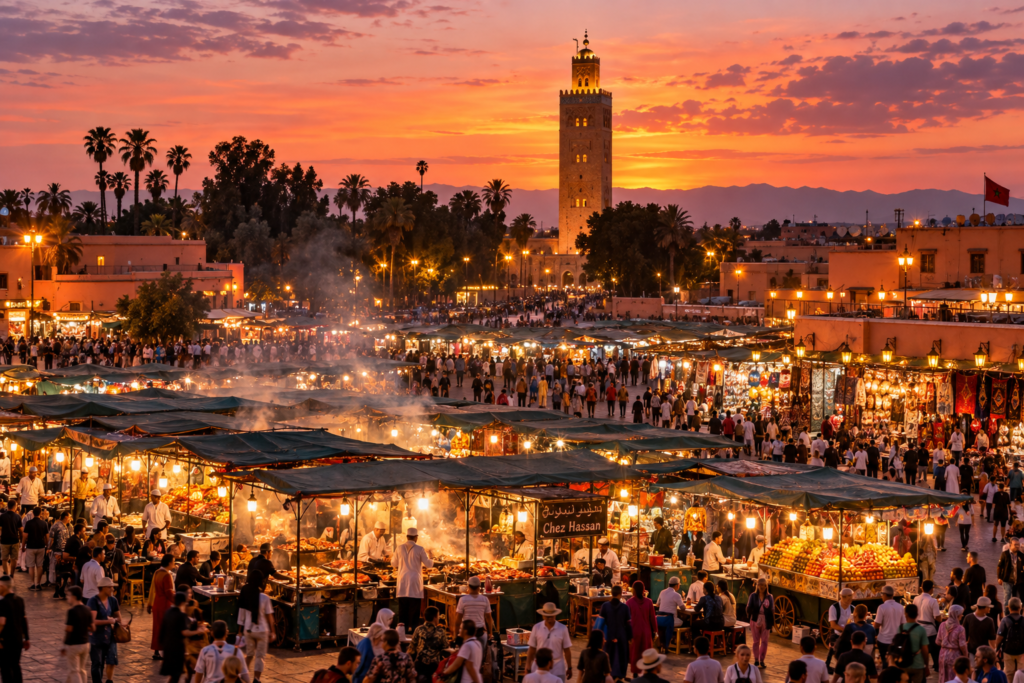
What it is: Jemaa el-Fnaa is the central square of Marrakech, surrounded by the city’s historic medina. The area is a dense mix of souks, food stalls, workshops, cafés, riads, and historic streets. It changes noticeably from day to night.
If this is your first time in Marrakech, this is the part of the city I would explore first.
During the day, I focus on the souks. The lanes branch into areas selling spices, leather, textiles, lamps, ceramics, and metalwork. You do not need a shopping list. Walking through the maze is the main experience, although expect shopkeepers to approach you.
In the evening, return to Jemaa el-Fnaa. The square becomes busier as food stalls open and performers, storytellers, and musicians appear. The Koutoubia Mosque provides an easy landmark when you are trying to orient yourself.
Practical details: The square and medina are in central Marrakech and are easy to reach on foot from many riads. A petit taxi is useful if you are staying farther away, but vehicles cannot take you through the pedestrian heart of the medina.
There is no general entrance ticket for Jemaa el-Fnaa or the medina. Your main costs are food, shopping, transport, and an optional licensed guide.
I recommend visiting twice rather than trying to experience everything in one visit: once during the day for the souks and again after sunset for the square.
How long to allow: Half a day for a quick visit; one full day if you want to explore the medina properly.
Worth it or overrated: Worth it for first-time visitors. It gives you the clearest sense of Marrakech’s character, but it is not a relaxing attraction. Crowds can be dense, especially around the main square and popular souks. Touts and shopkeepers can also be persistent.
If you dislike aggressive selling or busy pedestrian areas, limit your time here rather than forcing yourself to spend an entire day.
Budget snapshot: No general entry fee. Budget separately for meals, drinks, souvenirs, taxi fares, and a licensed guide if you want historical context.
Expert tip: Visit the medina and Jemaa el-Fnaa twice. Go during daylight for the souks, then return after sunset when the square takes on a completely different rhythm.
2. Jardin Majorelle
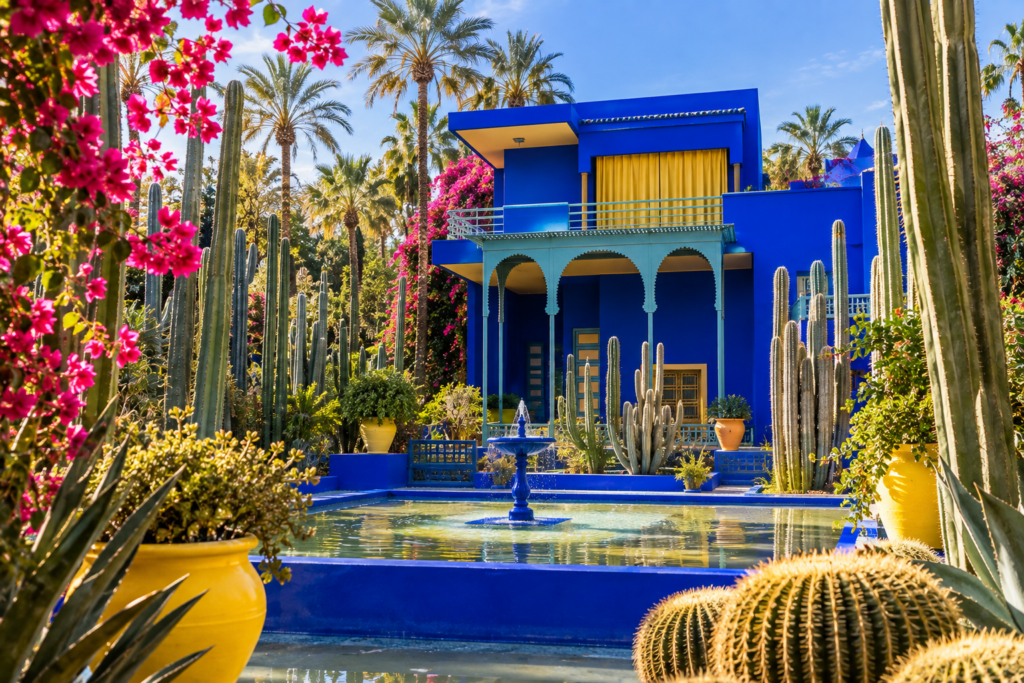
What it is: Jardin Majorelle is a compact botanical garden in Marrakech’s Gueliz area, best known for its cobalt-blue buildings, cactus collections, shaded paths, and connection with fashion designer Yves Saint Laurent.
It offers a useful contrast to the medina.
The garden itself is relatively small, so do not plan half a day for it. The appeal comes from the combination of architectural design, plant collections, and the strong blue-and-green visual palette.
The main highlights are the blue villa, garden paths, cactus collections, and the Berber Museum. Depending on your interests and ticket options, you may want to combine the garden visit with the museum rather than treating them as completely separate stops.
Practical details: Jardin Majorelle is in the Gueliz district and can be reached by petit taxi from the medina. Walking is possible, but the distance and Marrakech heat make a taxi more practical for many travelers.
There is a paid entrance fee, and ticketing arrangements can change. Check the official booking information before you go, particularly if timed entry is being used during your travel dates.
I prefer going early. The garden is much easier to appreciate before the middle of the day, when visitor numbers increase and the paths become congested.
How long to allow: Around 1–2 hours, depending on whether you also visit the museum.
Worth it or overrated: Worth it if you enjoy gardens, architecture, photography, or design. It is less important if your priority is historic Morocco.
The biggest drawback is its size. Some visitors expect a large botanical garden and are surprised by how quickly they can walk through it. By mid-morning, crowds can also reduce the sense of calm that makes the garden attractive.
If you have only one day in Marrakech, I would prioritize the medina and major historic sites first.
Budget snapshot: Paid entry. Check the current official ticket price and whether combined or timed tickets apply. Allow extra if you plan to visit the Berber Museum.
Expert tip: Go early and treat Jardin Majorelle as a short, focused stop rather than building your entire morning around it. It works particularly well before continuing into Gueliz or returning toward the medina.
3. Fes el-Bali
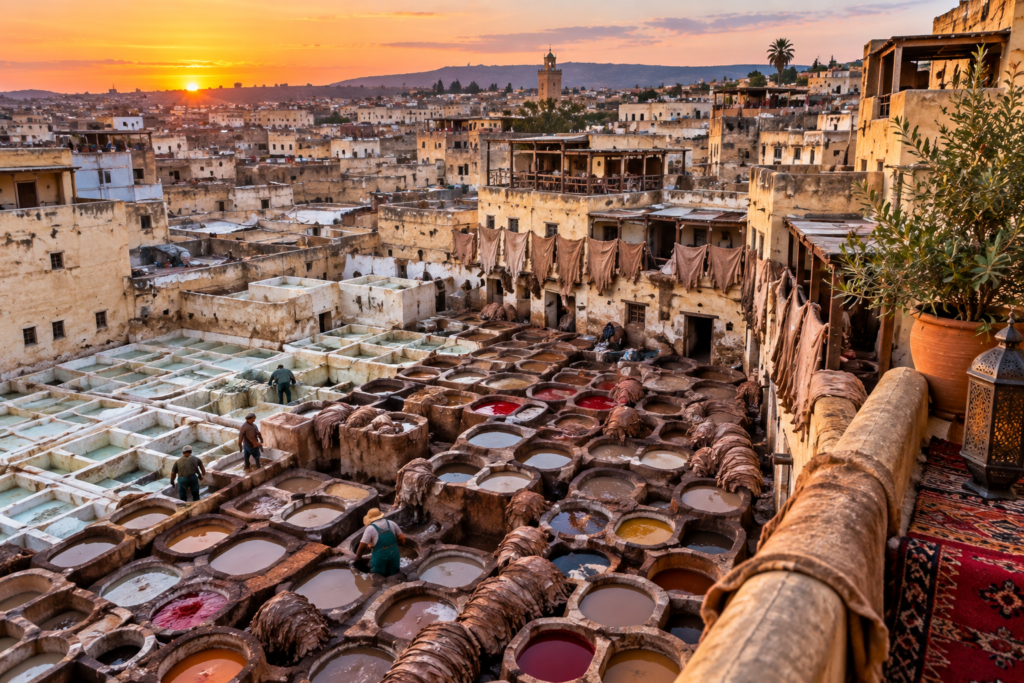
What it is: Fes el-Bali is the oldest walled section of Fes and one of Morocco’s most important historic medinas. Its narrow, mostly car-free streets lead through souks, tanneries, madrasas, workshops, fondouks, and centuries-old buildings.
Fes el-Bali is the real test.
If you enjoy getting lost in a dense medieval maze and stopping to look at architecture, crafts, and daily life, give it a full day. If you want quick photo stops and wide open streets, you may find it frustrating.
The main highlights include Chouara Tannery, Bou Inania Madrasa, Al-Attarine Madrasa, and the surrounding souks. The tanneries are particularly well known, but they are only one part of the medina. I would not spend your entire visit chasing the best tannery viewpoint.
The streets themselves are the attraction.
Practical details: Fes is well connected by train with cities including Casablanca, Rabat, and Marrakech. From the railway station, take a petit taxi toward the medina gates and continue on foot.
A licensed local guide is worth considering for a first visit. The medina is large, the lanes can be confusing, and a good guide adds historical context that you will miss if you simply follow a navigation app.
Go in the morning if possible. You will generally have more comfortable walking conditions and a better chance of exploring the busiest sections before the crowds build.
How long to allow: At least half a day; one full day is much better.
Worth it or overrated: Worth it for travelers who enjoy history, architecture, and traditional city life. It can be frustrating if you dislike close crowds, persistent shopkeepers, or navigating narrow streets.
Do not judge Fes from a rushed two-hour visit.
Budget snapshot: There is no general entrance fee for the medina. Some madrasas, museums, and historic attractions charge separate admission. Budget for a licensed guide if you want one, plus food, drinks, and taxis.
Expert tip: Hire a licensed local guide for your first Fes el-Bali visit. It reduces the navigation headache and makes the historic buildings much easier to understand.
4. Chefchaouen
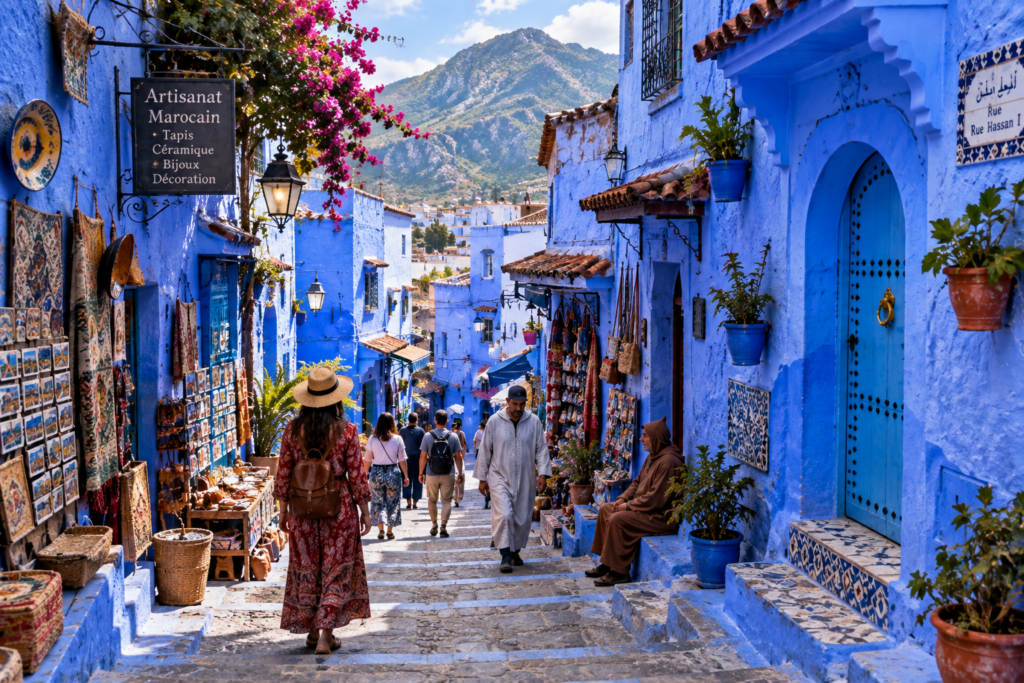
What it is: Chefchaouen is a small mountain town in Morocco’s Rif region, known for its blue-painted medina, steep lanes, traditional doors, and mountain setting.
The blue streets are the obvious attraction, but the town works best when you slow down.
Walk the medina early in the morning. Look beyond the most photographed walls and explore the smaller lanes, stairways, doorways, and residential sections. The Spanish Mosque viewpoint is another useful stop, particularly around sunset when you can look back toward the town and Rif Mountains.
Chefchaouen is considerably smaller than Marrakech or Fes. That is part of its appeal, but it also means the sightseeing can become repetitive after a while.
Practical details: Chefchaouen is in northern Morocco and is commonly reached by bus, private transfer, or taxi from Fes or Tangier. There is no railway station in the town, so allow more transfer time than you would for a rail-connected city.
The medina itself is free to enter.
Spring and autumn are comfortable periods for walking, although conditions can vary. Regardless of season, early morning is the better choice if photography and quieter streets are important to you.
By midday, the most popular blue lanes can become crowded.
How long to allow: Half a day to one full day. One night is enough for many travelers.
Worth it or overrated: Worth it if it fits naturally into your northern Morocco route. Photographers and travelers who prefer smaller towns will probably want more time.
If you are on a short itinerary, however, I would not add a long detour solely for the blue streets. Once you have explored the medina and viewpoints, there is less to occupy your time than in Fes or Marrakech.
Budget snapshot: There is no general entrance fee for the medina. Budget for accommodation, meals, local transport, and any excursions or hiking you add.
5. Merzouga & Erg Chebbi Sahara
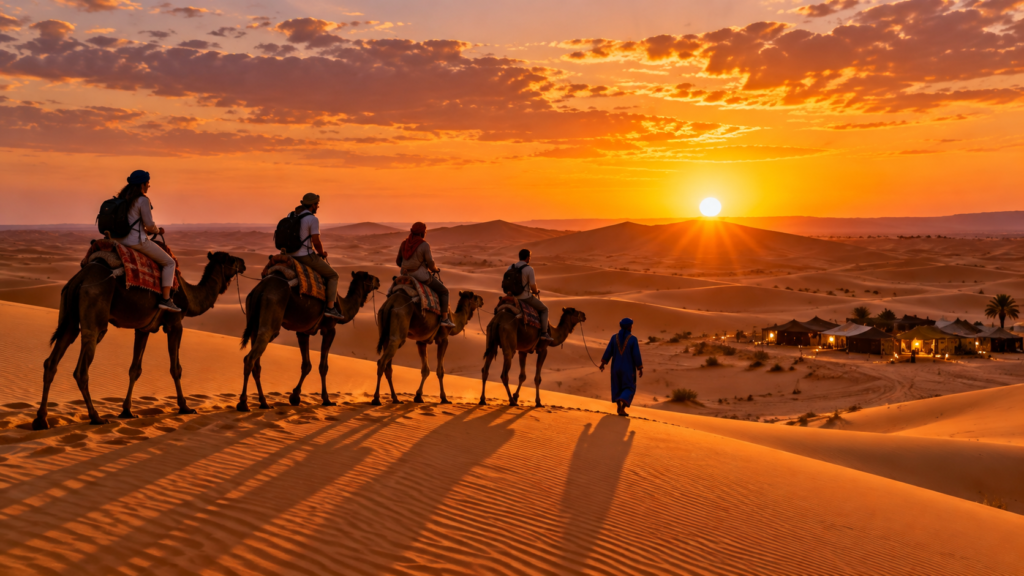
What it is: Merzouga is the main gateway to the Erg Chebbi dunes, where travelers come for camel treks, desert camps, sunset and sunrise views, and overnight stays beneath the open sky.
The desert itself is worth the effort.
The problem is getting there.
Merzouga is far from Morocco’s major northern and western cities, so the long road journey needs to be treated as part of the itinerary rather than an inconvenience you can simply ignore.
The classic experience starts with a camel trek toward the dunes in the late afternoon. After sunset, most travelers continue to a desert camp for dinner and an overnight stay. The following morning, an early start gives you the chance to see sunrise over the dunes before returning toward Merzouga.
I would choose an overnight experience rather than a rushed camel ride.
The difference is substantial.
Practical details: Merzouga is in southeastern Morocco. Travelers commonly reach it by road from Fes, Marrakech, Ouarzazate, or other stops in the southeast. Private transfers provide more flexibility, while organized tours can simplify the long-distance logistics.
The best time depends on what you tolerate. March–April and October–November generally offer more manageable temperatures than the peak summer months, but desert conditions can change quickly. Winter nights can also be genuinely cold, so do not pack only for daytime temperatures.
Book your desert camp in advance during popular travel periods. Compare what the package actually includes rather than choosing solely by the headline price. Transport to the dunes, meals, camel rides, camp type, and private facilities can vary considerably.
How long to allow: At least 1 night in the desert. Ideally, allow 2–3 days for the broader desert section of your route.
Worth it or overrated: Worth it if you have enough time. The dunes and overnight camp are genuinely different from the rest of a Morocco itinerary.
But the driving is a real trade-off.
If you only have five or six days in Morocco, I would not spend a large part of the trip sitting in a vehicle simply to fit Merzouga into the itinerary. Save it for a longer trip.
Budget snapshot: This is one of the more expensive experiences on a Morocco itinerary. Budget for the long-distance transport, desert camp, meals, camel trek, and any private transfers. Prices vary substantially by camp category and season, so verify the current package before booking.
Expert tip: Book your desert camp and major excursions with a reputable local operator before peak periods such as October and March–April. Check exactly what is included, especially transport, meals, camel trekking, and overnight accommodation.
6. Ait Benhaddou
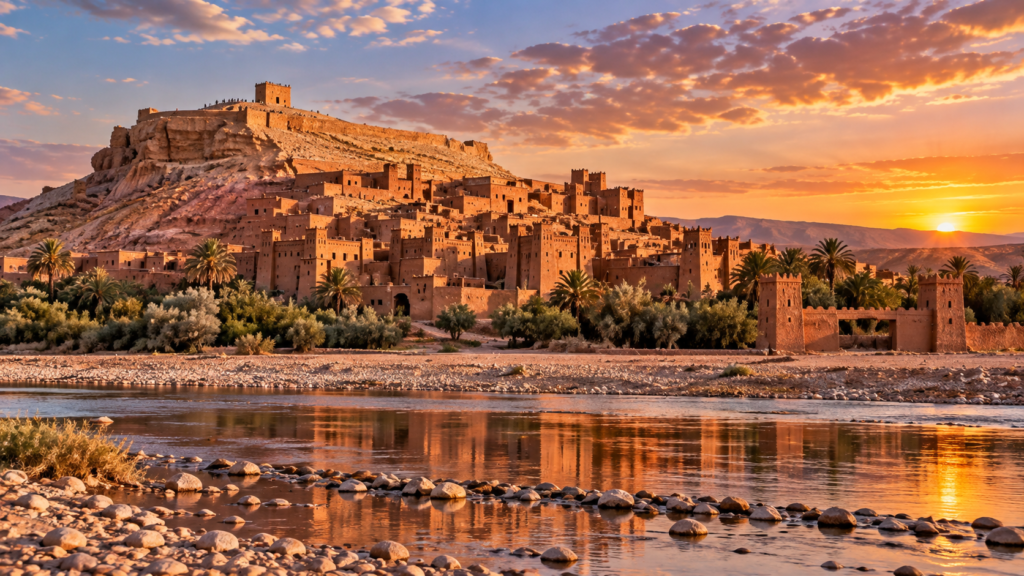
What it is: Ait Benhaddou is a fortified ksar near Ouarzazate, built from earthen materials along an old trans-Saharan caravan route. Its compact cluster of kasbah-style buildings is one of Morocco’s most recognizable historic landscapes and has also appeared in numerous film and television productions.
The setting is the main reason to stop.
From across the river, the settlement rises above the surrounding landscape in a way that makes the architecture easy to appreciate before you even enter. Once inside, narrow passages lead between old buildings toward higher ground, where the views become more open.
The hilltop granary is worth the climb if conditions allow. You also get a better sense of the surrounding valley from the upper sections than from the main entrance.
Practical details: Ait Benhaddou sits between Marrakech and Ouarzazate and is most practical as part of a southern Morocco road trip. You can reach it by car, private transfer, bus connections combined with local transport, or as part of a desert tour.
There is no single general entrance ticket for the entire ksar. Some buildings and kasbah interiors may charge small admission fees, so check locally when you arrive.
Go early.
The exposed setting gets hot around midday, and organized groups can make the main lanes considerably busier.
How long to allow: Around 2–3 hours.
Worth it or overrated: Worth it for architecture, history, and film-location enthusiasts. It is particularly easy to recommend when it already sits on your route toward Ouarzazate or the desert.
I would not make a long standalone trip from Marrakech just to see Ait Benhaddou if your itinerary is already tight. The driving becomes a significant part of the day.
Budget snapshot: Relatively inexpensive as a sightseeing stop. Budget for transport and any small entrance fees for individual kasbahs or buildings.
Expert tip: Start Ait Benhaddou early. The combination of direct sun, exposed walking, and tour groups makes the middle of the day less comfortable.
7. Todra Gorge
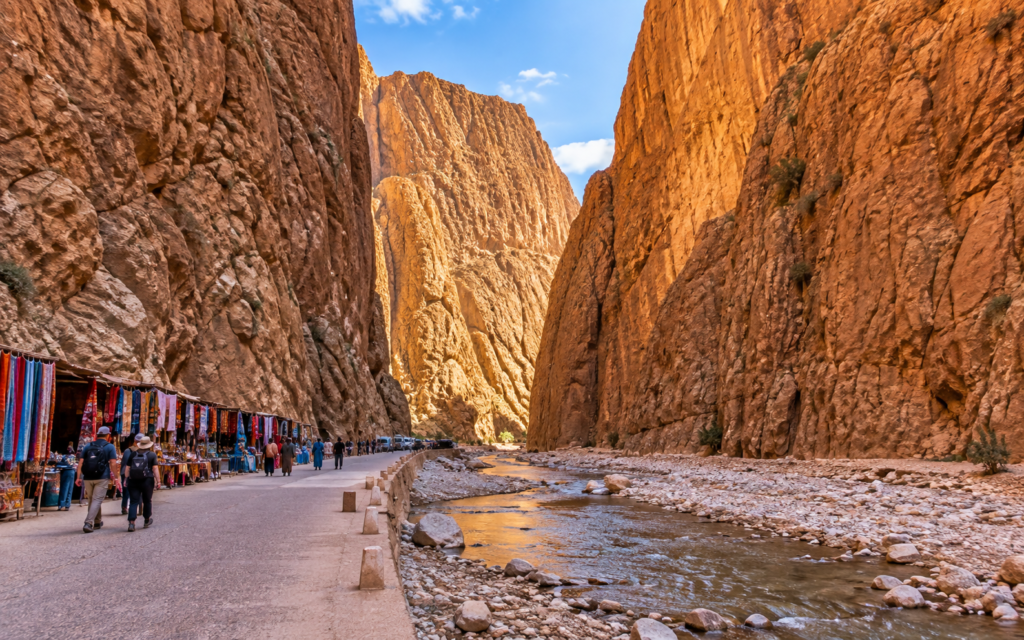
What it is: Todra Gorge is a dramatic limestone canyon near Tinghir in eastern Morocco. The road follows the valley toward steep canyon walls, making it a natural stop on routes connecting the High Atlas, Dades region, and Sahara.
You do not need to be a climber to enjoy it.
The narrowest section is the obvious highlight. Walk along the road and riverbed area, look up at the canyon walls, and continue into the surrounding valley if you have more time.
The nearby palm groves also add useful contrast to the rocky landscape.
Practical details: Todra Gorge is near Tinghir and is easiest to reach by car, private transfer, or an organized desert route. There is no general entrance ticket for the gorge.
Early morning is the better time to visit. Temperatures are easier to handle, and the narrow canyon is less likely to be filled with tour groups.
If you are staying nearby, consider spending a night around Tinghir rather than treating the gorge as a rushed photo stop.
How long to allow: Around 1–3 hours for the main gorge area. Longer if you want to hike or explore beyond the central section.
Worth it or overrated: Worth it as part of a desert or southern Morocco road trip. The landscape is the reason to stop, but I would not travel across Morocco specifically for Todra Gorge.
If you are not already passing through the area, the additional driving is difficult to justify on a short trip.
Budget snapshot: No general entrance fee. Your main costs are transport, accommodation if you stay overnight, food, and an optional local guide or activity.
8. Essaouira
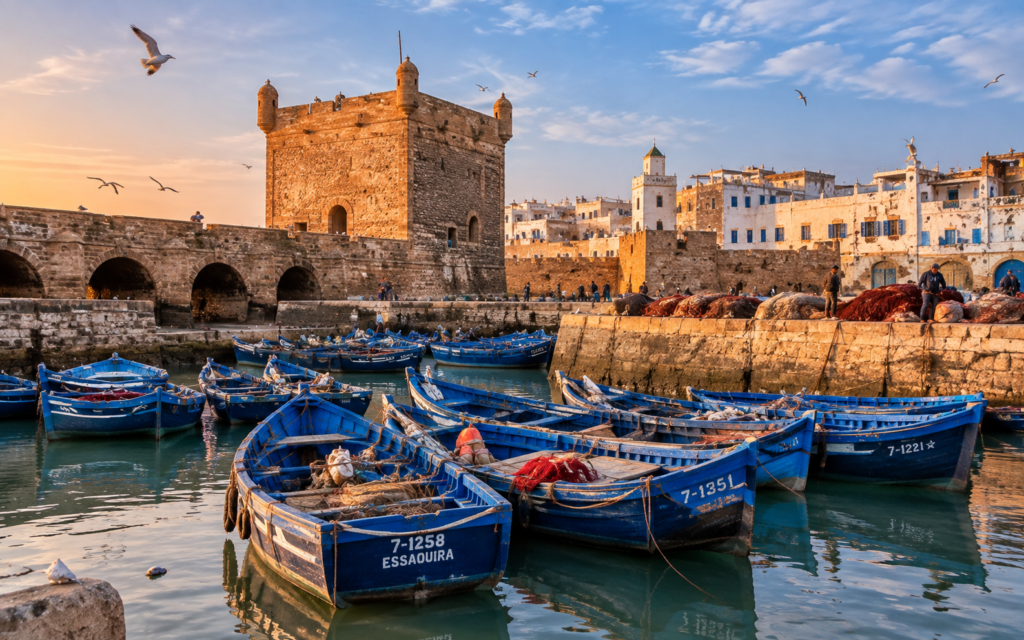
What it is: Essaouira is a fortified Atlantic port town with a compact medina, historic ramparts, fishing harbor, galleries, cafés, and a broad beach. It provides a slower coastal contrast to the intensity of Marrakech and Fes.
This is one of the places where I would deliberately slow down.
Walk the Skala ramparts, watch the fishing activity around the port, then explore the medina without trying to see every street. The blue fishing boats are particularly recognizable, while the harbor gives you a very different working side of Morocco compared with the inland souks.
The Atlantic wind is part of the experience.
It can also make a warm afternoon feel surprisingly cool, so carry a light layer even when the forecast looks hot.
Practical details: Essaouira is on Morocco’s Atlantic coast and is straightforward to reach from Marrakech by bus, private transfer, or taxi. The medina itself is not ticketed.
You can visit as a day trip from Marrakech, but I prefer staying one night if your schedule allows. The town becomes easier to enjoy once you are not watching the clock for the return journey.
Spring and autumn are particularly comfortable for exploring on foot. Wind can be strong at other times, especially along the waterfront.
How long to allow: One full day; ideally one night if you want a slower pace.
Worth it or overrated: Worth it if you want a coastal break from Morocco’s inland cities. The town is less intense than Marrakech and easier to explore at your own pace.
If you only have a few days and your priority is the imperial cities and Sahara, however, I would skip Essaouira rather than trying to squeeze everything into the same itinerary.
Budget snapshot: Entry to the medina is free. Budget for transport, accommodation if staying overnight, meals, seafood, cafés, and any small fees associated with specific historic sites or ramparts.
9. Hassan II Mosque, Casablanca
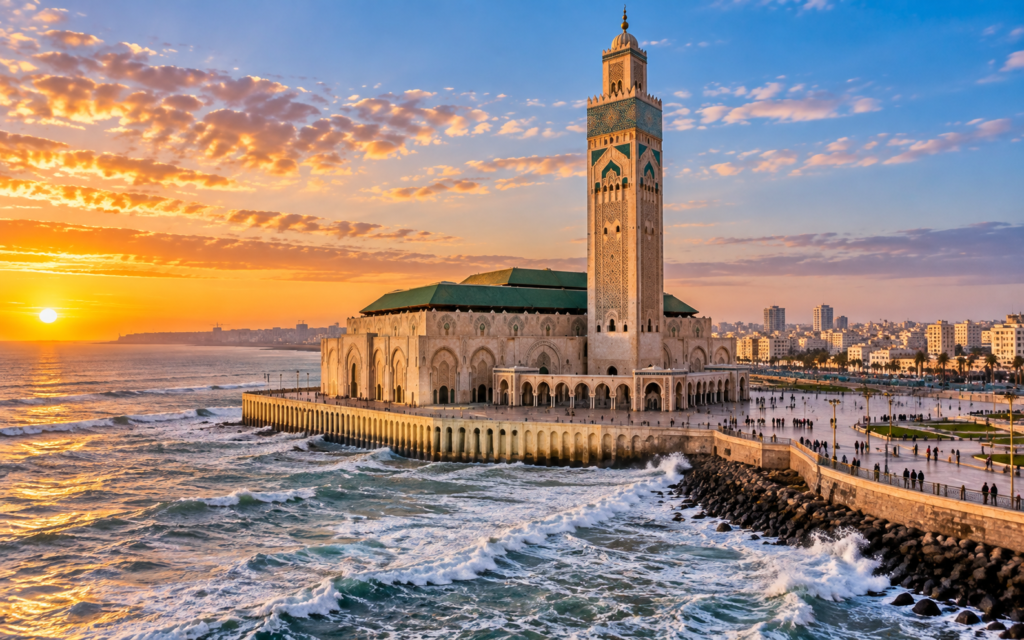
What it is: Hassan II Mosque is one of Casablanca’s defining landmarks, built directly beside the Atlantic Ocean. Its 200-metre minaret, extensive prayer hall, marble, zellige, carved plaster, woodwork, and oceanfront setting make it substantially different from the medina attractions elsewhere in Morocco.
The main reason I would include it is simple: non-Muslim visitors can enter on a guided tour, which is unusual for Moroccan mosques.
The interior is the part worth planning around. From the outside, you can appreciate the scale and oceanfront position quickly. The guided visit gives you access to the architectural details that are easy to miss from the plaza.
Practical details: The mosque is in Casablanca and is easy to reach by taxi from central areas. Casablanca is also well connected by train with cities such as Rabat and Marrakech, making the mosque practical as a stop during a wider itinerary.
Non-Muslim visitors need to follow the mosque’s guided-tour schedule. The Fondation Hassan II currently lists specific visiting times that vary by season and change during Ramadan. For example, the standard schedule includes morning and afternoon tours, while Ramadan has a separate timetable.
Current listed adult foreigner admission is 140 dirhams, but check the official Fondation schedule and price before travelling because both hours and fees can change.
Dress modestly and arrive with enough time for the scheduled tour rather than treating the mosque like an attraction with open entry throughout the day.
How long to allow: Around 1.5–2 hours for the guided visit and surrounding exterior.
Worth it or overrated: Worth it if architecture interests you or your route already passes through Casablanca. The opportunity to enter a functioning Moroccan mosque makes this more than a quick exterior photo stop.
If Casablanca is completely outside your route and you have only a few days, I would not create a major detour solely for the mosque.
Budget snapshot: Paid guided tour. The Fondation currently lists foreign-adult admission at 140 dirhams. Verify the latest price and schedule before visiting.
10. Atlas Mountains
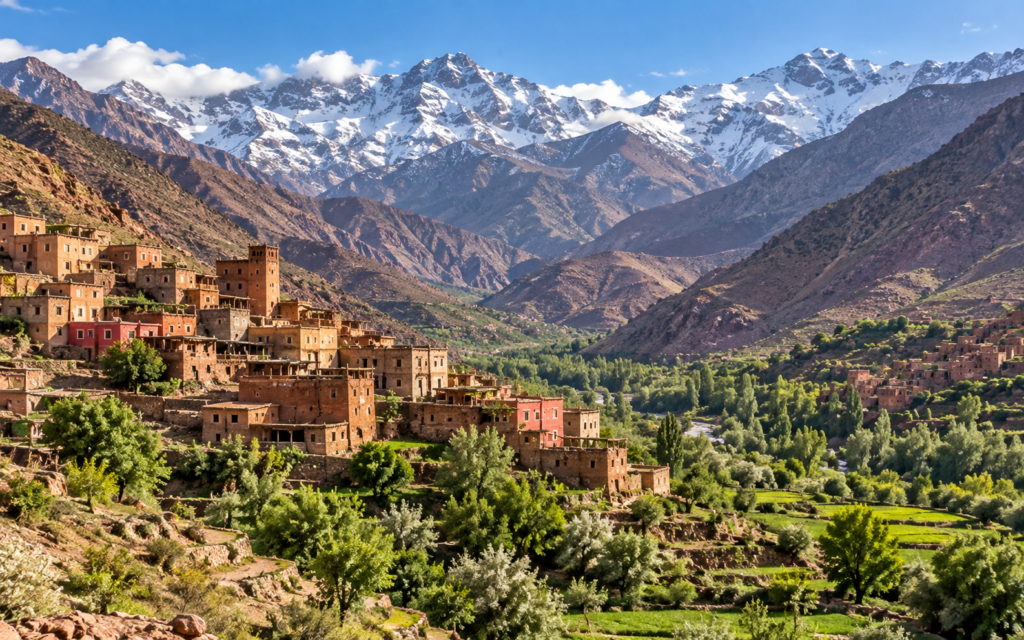
What it is: The High Atlas is the mountain range south of Marrakech, stretching across much of central Morocco. It offers hiking, mountain villages, valleys, scenic drives, and access to Toubkal, the highest peak in North Africa at 4,167 metres.
This is the attraction I would use to break up a city-heavy itinerary.
You do not need to climb Toubkal to experience the Atlas Mountains. A day trip can include a village walk, mountain scenery, lunch, and a short hike. More serious trekkers can stay longer and arrange multi-day routes.
The important distinction is between a mountain day trip and a proper trek. They are not interchangeable.
The Moroccan National Tourist Office notes that Toubkal ascents generally take two or three days depending on the route and summit plan, while the Marrakech area also provides access to shorter mountain experiences.
Practical details: The Atlas Mountains can be reached from Marrakech by private transfer, organized excursion, or local transport combined with a guide. Popular starting areas include the valleys and villages around the Toubkal region.
For a simple day trip, you can leave Marrakech in the morning and return in the evening. For hiking beyond an easy village walk, use a guide who knows the route and current mountain conditions.
Spring and autumn are generally comfortable for lower-elevation hiking. Winter brings snow and ice to higher areas, so conditions need to be checked before setting out.
How long to allow: One full day for a practical Marrakech mountain excursion. Allow 2–3 days or more for a serious Toubkal trek.
Worth it or overrated: Worth it for hikers and travelers who want a genuine change of scenery from the cities.
If your idea of a Morocco trip is mainly medinas, historic architecture, food, and the coast, you can skip the mountains without feeling that you have missed the core of the country.
Budget snapshot: There is generally no entrance ticket for simply visiting the mountain areas. Budget for transport, a guide where appropriate, meals, and accommodation if you stay overnight.
Quick-Reference Comparison Table
| Attraction | Location / Region | Best Time to Visit | Key Highlight | Suggested Time |
|---|---|---|---|---|
| Jemaa el-Fnaa & Marrakech Medina | Marrakech | Day for souks; after sunset for Jemaa el-Fnaa | Souks, food stalls, storytellers, Koutoubia views | ½–1 full day |
| Jardin Majorelle | Marrakech | Early morning | Blue villa and cactus garden | 1–2 hours |
| Fes el-Bali | Fes | Morning, ideally with a licensed guide | Tanneries, souks, medieval madrasas | ½–1 full day |
| Chefchaouen | Rif Mountains | Spring/autumn; early morning | Blue-washed medina lanes | ½–1 day |
| Merzouga & Erg Chebbi Sahara | Southeastern Morocco | March–April or October–November | Camel trek and desert camp | 1 night minimum; 2–3 days better |
| Ait Benhaddou | Between Marrakech and Ouarzazate | Early morning | Fortified earthen ksar | 2–3 hours |
| Todra Gorge | Near Tinghir | Early morning | Limestone canyon walls | 1–3 hours |
| Essaouira | Atlantic coast | Spring/autumn | Medina, ramparts, fishing port | 1 full day |
| Hassan II Mosque | Casablanca | Around scheduled guided-tour times | Oceanfront mosque and 200 m minaret | 1.5–2 hours |
| Atlas Mountains | High Atlas, south of Marrakech | Spring/autumn for lower-elevation hiking | Mountain villages, valleys, hiking | 1 day; 2–3+ days for Toubkal |
Planning note: These suggested times are practical sightseeing allowances rather than official visit durations. Your actual time will depend on walking pace, guided tours, transport, hiking, photography, and how much time you spend eating or shopping.
For Jardin Majorelle, the official site currently lists daily opening from 8:00 a.m. to 6:30 p.m., with last entry at 6:00 p.m., and recommends reserving online in advance.
For Hassan II Mosque, use the Fondation’s official schedule rather than relying on an old travel blog. Tour times vary by season and are adjusted during Ramadan.
For the Atlas Mountains, conditions vary considerably with altitude and season. The High Atlas includes Toubkal at 4,167 metres, so a casual Marrakech day trip should not be planned like a high-altitude trek.
Geographic Grouping & Suggested Route Order
The easiest way to make Morocco feel manageable is to plan by region first and attraction second. The country is large enough that a badly ordered itinerary can turn a week of sightseeing into several long travel days.
I would not try to visit these 10 attractions in the order they appear in the list. Instead, build the trip around regional clusters and use trains for the major cities, then road transport for the mountain and desert sections.
The route below moves from the north and Atlantic side into central Morocco, then south and east toward the desert, before returning west.
Northern Loop: Chefchaouen, Fes, Casablanca
Suggested Order: Casablanca → Fes → Chefchaouen
If you fly into Casablanca, start with Hassan II Mosque. You only need a few hours for the mosque and its guided tour, so there is no need to spend several days in Casablanca unless you have other reasons to stay.
From Casablanca, take the train to Fes. Fes el-Bali deserves much more time than Hassan II Mosque, so give it at least a full day.
Then continue north to Chefchaouen.
This order works particularly well if you arrive in Casablanca or Tangier and want to begin with Morocco’s major northern cities before moving south.
Practical Point: Do not treat Chefchaouen as a quick stop between Fes and your next destination. The road journey takes time, and the town is best enjoyed with at least one night rather than as a rushed photo break.
Marrakech & Atlas Mountains
Suggested Order: Marrakech Medina → Jardin Majorelle → Atlas Mountains
Marrakech works well as a base because several attractions can be grouped without changing hotels.
Spend your first day around Jemaa el-Fnaa and the medina. Explore the souks during daylight, then return to the square after sunset.
Visit Jardin Majorelle separately, preferably early in the morning. It is in a different part of the city, so combining it with the medina can make the day unnecessarily rushed.
Then use another day for the Atlas Mountains if hiking, village walks, or mountain scenery appeal to you.
This section is also where you need to decide whether you are continuing into southern Morocco by road. If you are heading toward Ait Benhaddou and the desert, avoid booking a return flight from Marrakech immediately after your mountain excursion.
Leave some flexibility.
Desert & South
Suggested Order: Marrakech → Ait Benhaddou → Todra Gorge → Merzouga
This is the longest and most road-heavy section of the route.
From Marrakech, travel south toward Ait Benhaddou, then continue through the Ouarzazate and Tinghir areas toward Todra Gorge before reaching Merzouga and Erg Chebbi.
I would not try to cover this section in one or two rushed days.
A more practical plan is to stop overnight along the route, particularly if you want time to explore Ait Benhaddou and Todra Gorge rather than simply photographing them from a roadside viewpoint.
The desert should also be treated as an overnight experience, not a quick excursion. Once you factor in the long road distances, a rushed Sahara trip can leave you spending more time in a vehicle than in the dunes.
Practical Point: Book desert accommodation and organized excursions ahead during busy periods. Compare the complete package rather than just the advertised camp price.
Coastal Return: Essaouira
Suggested Order: Marrakech → Essaouira
Essaouira works particularly well at the end of a Marrakech stay.
The journey from Marrakech is relatively straightforward compared with the desert section, and the change of scenery is useful after several days of inland travel.
Spend the day walking the medina, exploring the ramparts, visiting the fishing port, and taking time for a meal rather than trying to pack in a long sightseeing list.
If you are already returning to Marrakech for your flight, Essaouira can be added as a day trip. If your schedule allows, staying one night makes the stop less rushed.
A practical all-10 route
If you have enough time to cover the entire list, I would structure it roughly like this:
Casablanca → Fes → Chefchaouen → Marrakech → Atlas Mountains → Ait Benhaddou → Todra Gorge → Merzouga → Marrakech → Essaouira
There is one important caveat: this is not the route I would recommend for a short holiday.
Trying to see all 10 attractions in one week means too much time on the road. For a shorter trip, choose one regional circuit rather than forcing every attraction into the itinerary.
Travel times and transport schedules vary by season and operator, so check the current ONCF train schedule, bus timetable, or local transfer arrangements before fixing accommodation around a specific departure.
Best Time to Visit Morocco
There is no single perfect month for the whole country. Morocco’s geography creates noticeable differences between the Atlantic coast, imperial cities, mountains, and Sahara.
Spring: March to May
Spring is one of the easiest periods for a multi-region Morocco trip.
Marrakech and the imperial cities are generally more comfortable for walking than during the peak summer heat. The Atlas Mountains are also accessible at lower elevations, although snow can remain at higher altitudes early in the season.
March and April can work well for the desert, but do not assume the Sahara will be cool. Daytime temperatures can still rise significantly.
Best for: Cities, hiking, road trips, and desert combinations.
Summer: June to August
Summer changes the itinerary.
Marrakech, the interior, and especially southeastern Morocco can become very hot during the day. Outdoor attractions such as Ait Benhaddou and Todra Gorge are much more comfortable early in the morning.
Essaouira is the obvious alternative. Atlantic winds keep the coastal town noticeably cooler than many inland destinations.
If you travel through the desert during summer, plan around the heat rather than trying to sightsee normally in the middle of the day.
Best for: Atlantic coast, early-morning sightseeing, and travelers comfortable with high temperatures.
Autumn: September to November
Autumn is another strong period for combining cities, mountains, and the desert.
September can still be hot inland. Conditions generally become more manageable as October progresses.
October is also a popular period for desert trips, so do not assume lower demand simply because summer has ended. Camps, guides, and popular accommodation can fill quickly.
Best for: Multi-city routes, desert trips, hiking, and road travel.
Winter: December to February
Winter is more varied than many first-time visitors expect.
Marrakech and the imperial cities can still be pleasant during the day, while evenings become cold. The Atlas Mountains can receive snow and higher-altitude routes may require different equipment or local advice.
The Sahara is also cold at night.
That does not make it a bad time to visit. It simply means you need to pack for the temperature difference between sunny daytime conditions and cold desert evenings.
The Atlantic coast remains accessible, although wind and cooler weather can affect beach plans.
Best for: Cities, cultural sightseeing, lower-elevation travel, and travelers who prefer cooler conditions.
Ramadan
Check the Islamic calendar before booking your Morocco itinerary.
During Ramadan, daily routines change. Some restaurants may operate different hours, attractions can adjust schedules, and the pace of life changes around fasting and sunset.
This does not mean you should automatically avoid Morocco during Ramadan.
It means you should plan differently.
Expect quieter daytime streets in some areas and increased activity after sunset. Allow extra time for meals and transport, and check the opening hours of individual attractions before setting out.
For a route involving several cities, verify Ramadan dates for your exact travel year rather than relying on a generic travel calendar.
Traveler Checklist
Use this checklist while planning your Morocco trip. Tick attractions off as you book, visit, or confirm them.
Attractions
- ☐ Jemaa el-Fnaa & Marrakech Medina
- ☐ Jardin Majorelle
- ☐ Fes el-Bali
- ☐ Chefchaouen
- ☐ Merzouga & Erg Chebbi Sahara
- ☐ Ait Benhaddou
- ☐ Todra Gorge
- ☐ Essaouira
- ☐ Hassan II Mosque, Casablanca
- ☐ Atlas Mountains
Pre-Trip Tasks
- ☐ Check passport validity and visa requirements for your nationality
- ☐ Book flights and accommodation
- ☐ Reserve your Sahara desert camp and Atlas Mountains excursions during busy travel periods
- ☐ Download offline maps before entering the medinas
- ☐ Carry small dirham notes and coins
- ☐ Save digital and paper copies of your passport and travel insurance
- ☐ Share your itinerary with a trusted contact before desert or mountain excursions
- ☐ Check attraction opening hours and guided-tour schedules shortly before departure
Practical Travel Tips & Cultural Etiquette
Safety & Solo/Female Travel
Morocco is generally straightforward to travel through, but busy medinas and transport hubs require the same awareness you would use in any major tourist destination.
Keep your phone, wallet, and passport secure in crowded areas. Avoid displaying large amounts of cash, particularly around busy souks and transport stations.
For solo travelers, especially women, modest clothing and sensible route planning can make the trip more comfortable. Avoid isolated areas late at night and use reputable guides or established tour operators for desert and mountain excursions.
Touts and unofficial guides can be persistent around major attractions. You do not need to argue with them. A firm “No, thank you” followed by continuing to walk is usually enough.
Expert tip: Keep digital and paper copies of your passport and travel insurance details. Before a desert trek or remote mountain excursion, leave your itinerary and expected return time with someone you trust.
Dress Codes & Religious Sites
Dress modestly when visiting religious sites and more conservative areas. Covering shoulders and knees is a sensible approach, particularly away from major tourist districts.
Morocco is accustomed to international visitors, but clothing that works at a hotel pool is not necessarily appropriate in a medina or religious setting.
Photography also deserves some thought. Ask permission before photographing local people, especially children, workers, or anyone who is clearly uncomfortable with a camera.
At Hassan II Mosque, non-Muslim visitors can enter only as part of the designated guided tours. Follow the mosque’s clothing requirements and instructions from the tour staff.
Expert tip: Carry a light scarf or extra layer. It takes up little space and can be useful when visiting religious or conservative places.
Bargaining & Touts
Bargaining is normal in many Moroccan souks, but it works best when treated as a conversation rather than an argument.
Prices can vary considerably between shops. If you are interested in an item, ask the price, make a counteroffer, and be prepared to walk away if you cannot agree.
Starting around half the initial asking price can be a useful negotiating reference for some tourist-market purchases, but there is no universal rule. Handmade goods, quality, location, and demand all affect the final price.
Do not bargain aggressively over a small amount if you are already happy with the item.
Taxi fares require similar attention. Where a meter is available, ask for it. Otherwise, agree on the fare before getting into the taxi.
Expert tip: If a seller’s approach becomes too persistent, you do not need a long explanation. A polite refusal and continuing toward your destination is usually the easiest solution.
Money & Payments
Carry small dirham notes and coins.
They are useful for petit taxis, small food purchases, cafés, tips, market purchases, and places where card payments are unavailable. Small businesses may also struggle to provide change for large banknotes.
Keep some cash in more than one secure location rather than carrying your entire travel budget in one wallet.
A currency-conversion app is useful when bargaining or comparing prices, particularly during the first few days when you are still getting used to dirham values.
For larger hotels, restaurants, and established businesses, card payments may be available, but do not assume every small vendor accepts them.
Expert tip: Break larger notes when you have the opportunity. Having exact or near-exact change makes short taxi rides and small purchases much easier.
Transport
Use Morocco’s ONCF rail network for major city connections where rail service is available. Trains are particularly useful between Casablanca, Rabat, Fes, and Marrakech and can save substantial time compared with travelling the same routes entirely by road.
For destinations such as Chefchaouen, Merzouga, Ait Benhaddou, and Todra Gorge, road transport becomes more important. Depending on your itinerary, that can mean buses, grand taxis, private transfers, rental cars, or organized tours.
Do not underestimate Moroccan road distances.
A destination that looks close on a map can take much longer once mountain roads, stops, traffic, and weather are considered.
Inside the medinas, vehicles often cannot follow you to your accommodation. Download offline maps before arriving and save the location of your riad so you can find your way back without relying entirely on mobile data.
Expert tip: Use trains for the major city-to-city sections and save road transport for places that genuinely require it. This keeps the itinerary simpler and reduces unnecessary long-distance driving.
Health & Insurance
Travel insurance is worth having, particularly if your itinerary includes hiking, desert excursions, rental cars, or remote areas.
Check that your policy covers the activities you actually plan to do. A standard policy may not automatically cover every adventure activity or higher-altitude excursion.
Hydration is another practical issue. Carry water when walking through medinas, exploring exposed historic sites, or travelling through the desert.
Sun exposure can become a problem even when temperatures do not initially feel extreme. Use sunscreen, wear suitable clothing, and take breaks during the hottest part of the day.
For mountain and desert trips, follow local weather and guide advice rather than relying solely on a generic city forecast.
Expert tip: Keep your insurance policy number and emergency contact details both on your phone and in a printed copy with your other travel documents.
Recommended Planning Tools & Resources
You do not need a dozen travel apps to plan Morocco. A small set of reliable resources is enough.
Moroccan National Tourist Office
Start with the Moroccan National Tourist Office for destination information, travel formalities, transport guidance, and regional attractions. Its official site also provides information on visa and passport requirements, payment methods, and getting around Morocco. Visit Morocco – Official Tourism Website
This should be your first reference when checking general travel information rather than relying on an old blog post.
Tripadvisor
Use Tripadvisor for recent traveler reviews, photos, and visitor feedback. It can be useful for identifying recurring complaints about crowds, tour operators, restaurants, or attraction logistics.
Treat individual reviews as personal experiences rather than official information. Check several recent reviews before making a decision.
Viator & GetYourGuide
For Sahara camps, Atlas Mountains excursions, guided medina walks, and multi-day tours, platforms such as Viator and GetYourGuide make it easier to compare itineraries and inclusions.
Pay attention to what the advertised price actually covers. A low headline price may exclude hotel pickup, meals, entrance fees, camel trekking, or private transport.
For desert trips in particular, check the camp location, transfer arrangements, accommodation type, and cancellation policy before booking.
ONCF
For major rail journeys, use the official ONCF website rather than relying on third-party timetable pages. ONCF provides current schedules, ticket information, and online booking for its rail services. ONCF – Official Moroccan Railways
Morocco’s rail network is particularly useful for city-to-city travel. Check the timetable close to your departure date because schedules can change, including during Ramadan and major holiday periods.
Google Maps or Maps.me
Download offline maps before entering a large medina.
This matters most in Fes and Marrakech, where streets can become confusing quickly and your riad may be located inside a pedestrian area that a taxi cannot reach.
Save your accommodation location before leaving Wi-Fi.
XE Currency or a Currency App
Use a currency-conversion app to check prices in Moroccan dirhams (MAD). It is particularly useful during the first few days when you are still getting used to local prices.
Keep some physical cash even if you normally travel with cards. The Moroccan National Tourist Office notes that international cards are accepted by many hotels and some businesses, while ATMs are widely available.
Travel Insurance
Choose travel insurance that covers the activities actually included in your itinerary.
If you plan to hike in the Atlas Mountains, take a desert excursion, rent a car, or participate in adventure activities, check the policy exclusions before purchasing.
FAQ
How many days do I need to see all 10 attractions?
Allow roughly 12–16 days if you want to visit all 10 without turning the trip into a series of long transfers. You can see a smaller selection in 7–10 days, but the Sahara and southern Morocco require additional road time.
There is no practical reason to force all 10 into a one-week itinerary. For a shorter trip, choose a regional combination such as Marrakech + Atlas Mountains, Fes + Chefchaouen, or Marrakech + southern Morocco.
Is Morocco safe for tourists?
Morocco is a well-established international tourism destination, but normal travel precautions still matter. Stay alert in crowded medinas, train stations, markets, and other busy areas. Keep valuables secure and use reputable guides or operators for remote desert and mountain excursions.
The Moroccan National Tourist Office provides official practical and safety information for visitors.
Which attractions are best for families?
Essaouira, Jardin Majorelle, and the Marrakech medina can work well for families, particularly if children are comfortable walking.
Older children may enjoy a Sahara camp or Atlas Mountains excursion. The bigger issue is travel time. Long road journeys toward Merzouga can be tiring for young children, so consider breaking the journey with overnight stops.
Do I need a guide for Fes el-Bali?
A licensed local guide is strongly recommended for a first visit.
Fes el-Bali is large and complicated, with narrow lanes and many interconnected souks. A guide can also explain the history behind the madrasas, tanneries, workshops, and traditional buildings rather than simply taking you from one photo stop to another.
You can explore independently, but I would choose a guide if you have only one day in Fes.
Can I visit mosques in Morocco?
Most Moroccan mosques are not open to non-Muslim visitors, but Hassan II Mosque in Casablanca is an important exception. Non-Muslims can visit through the mosque’s designated guided tours.
Check the current tour schedule, admission price, and dress requirements before visiting because these details can change.
What should I wear in Morocco?
Choose modest, breathable clothing, particularly when visiting religious sites, traditional neighborhoods, and smaller towns.
Loose trousers, long skirts or dresses, shirts that cover the shoulders, and comfortable walking shoes work well for most sightseeing days.
A light layer or scarf is useful because temperatures can change considerably between daytime, evenings, mountains, and desert areas.
When is the best time to visit Morocco?
Spring and autumn are generally the easiest seasons for a multi-region itinerary.
March through May and September through November usually offer more manageable conditions for combining cities, mountains, road trips, and desert travel.
Summer can be extremely hot inland, while winter brings cold nights and possible snow at higher Atlas elevations. The coast, particularly Essaouira, can have noticeably different conditions from Marrakech or the Sahara.
Are the attractions free?
Several attractions are free to enter, but not all.
The medinas of Marrakech and Fes, Essaouira’s medina, Todra Gorge, and many outdoor areas do not have a general admission ticket. Jardin Majorelle and Hassan II Mosque charge admission, while individual museums, madrasas, and kasbahs may have separate fees.
Check the official attraction website shortly before visiting. Prices and opening arrangements can change.
Should I book Morocco tours in advance?
Book the time-sensitive parts of the itinerary first.
For example, reserve popular Sahara camps, multi-day desert tours, Atlas excursions, and any attraction with timed entry before travelling during busy periods.
Leave less critical sightseeing flexible. This gives you room to adjust if a train is delayed, the weather changes, or you simply want another afternoon in a medina.
Sources, Accuracy & Updates
Last updated: September 2026
Morocco’s tourism figures used in this guide are based on the OECD Tourism Trends and Policies 2026 report. The OECD reports that Morocco received 19.8 million international tourists in 2025, an increase of 14% over 2024. France accounted for 29% of arrivals, followed by Spain at 23% and the United Kingdom at 7%.
The Moroccan National Tourist Office is used as the primary reference for practical destination information, travel formalities, transportation guidance, and regional attractions.
For rail information, use ONCF’s official website when checking schedules, fares, and ticket availability. Current schedules should always take priority over travel articles or third-party timetable sites.
Travel information changes. Opening hours, entrance fees, train schedules, tour availability, and Ramadan arrangements can all change between seasons.
For that reason, treat prices and schedules in this guide as planning references rather than permanent figures. Check the official attraction, operator, or transport website before travelling.
The practical observations throughout this guide are intentionally separated from official information. Crowd levels, road conditions, walking times, and the overall feel of an attraction can vary by season and time of day, so use them as planning guidance rather than fixed rules.
For the same reason, I have not treated every famous attraction as equally important. A good Morocco itinerary is not the one with the longest checklist. It is the one that gives you enough time to actually experience the places you chose.