
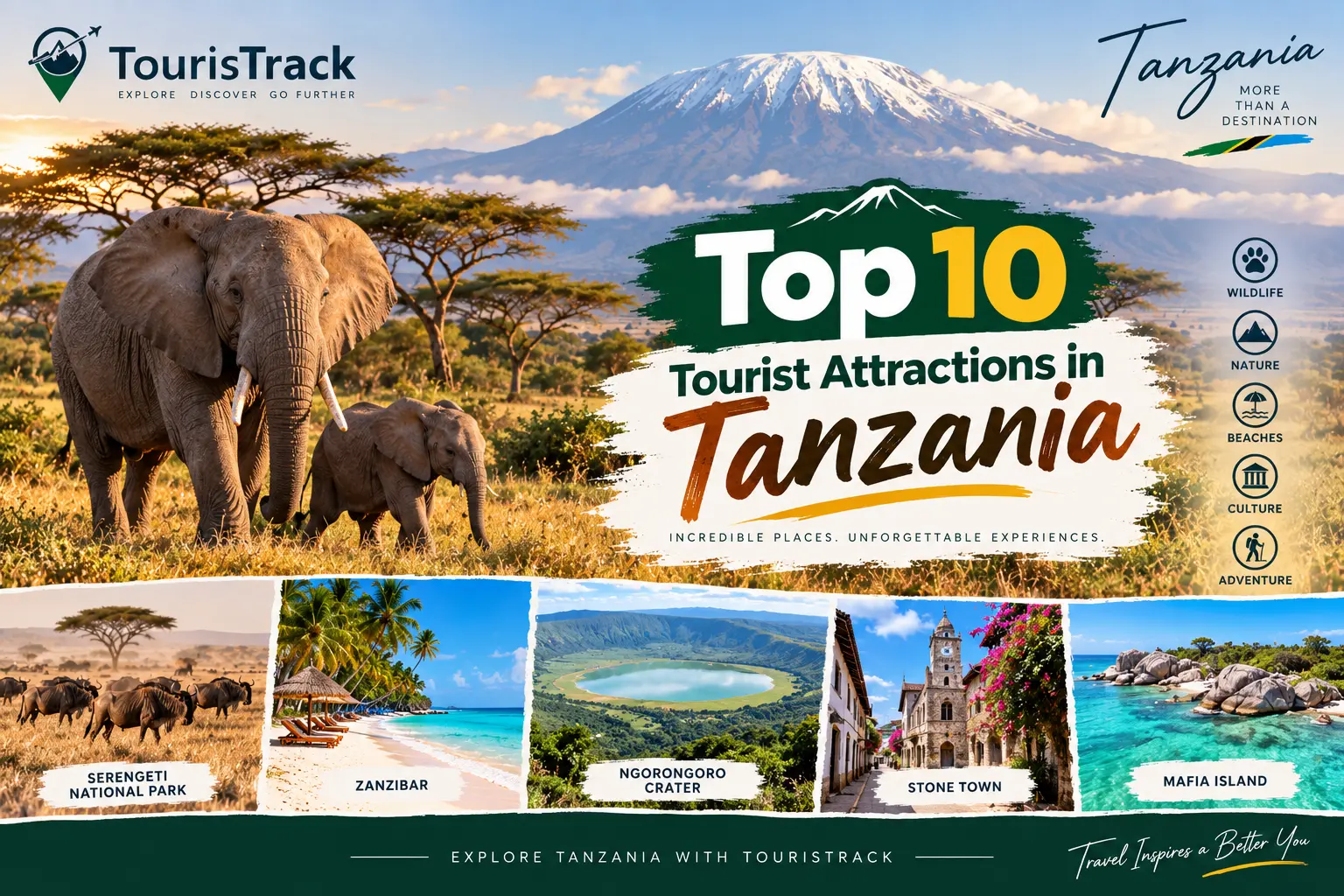

Tanzania is a destination where wildlife, dramatic landscapes, ancient history, and tropical beaches come together. From the vast plains of the Serengeti to the slopes of Mount Kilimanjaro and the historic streets of Zanzibar, the country offers far more than a traditional safari.
For travelers searching for the best tourist attractions in Tanzania, the hardest part may be deciding where to begin.
Whether you are interested in wildlife, adventure, culture, beaches, or natural scenery, these ten destinations offer a great introduction to Tanzania.
1. Serengeti National Park
The Serengeti is one of Tanzania’s most famous destinations and one of Africa’s best-known wildlife landscapes.
Its enormous grasslands provide habitat for large populations of wildlife, including lions, leopards, cheetahs, elephants, giraffes, zebras, and wildebeest. UNESCO recognizes Serengeti National Park as a World Heritage Site and notes its importance within the larger Serengeti ecosystem.
The park is particularly famous for the annual movement of wildebeest, zebras, and gazelles across the Serengeti ecosystem. The spectacle attracts travelers and photographers from around the world, but the Serengeti is worth visiting even outside the migration period.
A morning game drive can reveal predators resting beneath acacia trees, herds moving across the plains, and smaller wildlife that is easy to miss when traveling quickly.
For many visitors, the Serengeti becomes the defining experience of a Tanzania safari.
2. Ngorongoro Conservation Area
Few places in Tanzania combine wildlife, scenery, geology, and human history quite like the Ngorongoro Conservation Area.
At its center is the spectacular Ngorongoro Crater, the world’s largest unbroken caldera. The wider conservation area contains highland plains, forests, savannah, and other distinctive habitats.
The crater is particularly impressive because of the concentration of wildlife within its landscape. Visitors may encounter lions, elephants, buffaloes, zebras, wildebeest, and other animals during a game drive.
But Ngorongoro is more than a wildlife destination. The area also has deep cultural and archaeological importance, including a long record of human evolution and the famous Olduvai Gorge. UNESCO describes evidence from the area extending across almost four million years of human evolutionary history.
That combination makes Ngorongoro one of the most fascinating places to visit in Tanzania.
3. Mount Kilimanjaro
Rising above the surrounding landscape, Mount Kilimanjaro is one of Tanzania’s most recognizable landmarks.
It is Africa’s highest mountain and attracts trekkers and climbers from around the world. The mountain’s changing landscapes make the journey particularly memorable, with forests, high-altitude environments, and dramatic views along the way.
You do not necessarily have to climb to the summit to appreciate Kilimanjaro. The mountain can be admired from surrounding areas, where its snow-capped peaks create an unforgettable backdrop.
Mount Kilimanjaro National Park is also a UNESCO World Heritage property, reflecting the mountain’s natural and cultural significance.
For adventurous travelers, however, climbing Kilimanjaro can become the centerpiece of an entire Tanzania itinerary.
4. Zanzibar and Stone Town
After exploring Tanzania’s wildlife destinations, Zanzibar offers a completely different side of the country.
The island is known for its beaches, warm Indian Ocean waters, historic architecture, and distinctive Swahili culture. At the heart of the island’s historic character is Stone Town, a maze of narrow streets, markets, old buildings, and beautifully carved doors.
Stone Town is recognized by UNESCO as a World Heritage Site. The historic settlement reflects centuries of cultural interaction along the East African coast.
Walking through Stone Town is less about rushing between attractions and more about experiencing the atmosphere. You can explore historic streets, visit local markets, discover architectural details, and enjoy the coastal setting.
For travelers interested in combining a safari with history, culture, and beaches, Zanzibar is an excellent addition to a Tanzania trip.
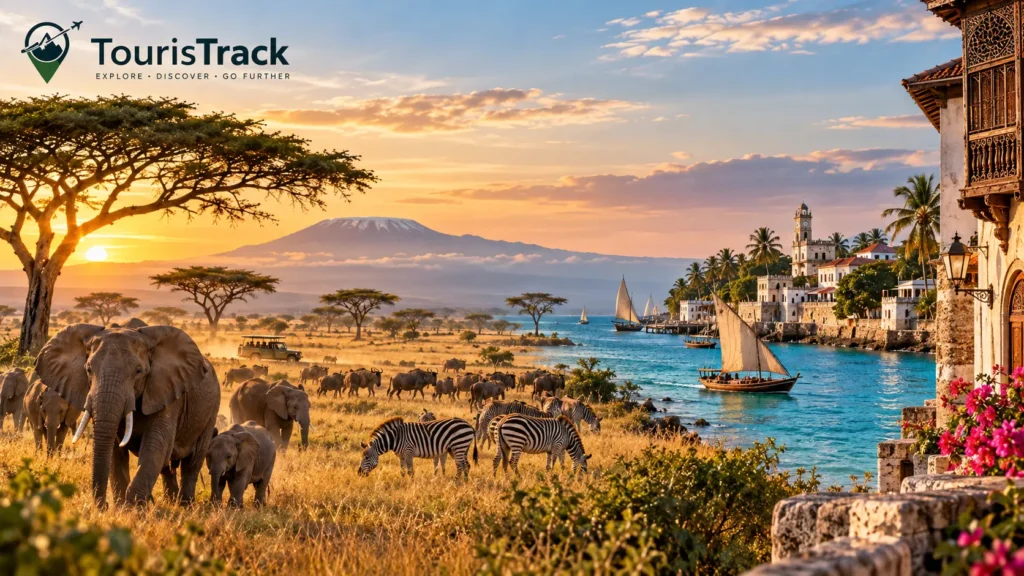
5. Tarangire National Park
Tarangire National Park is another important destination on Tanzania’s northern safari circuit.
The park is especially known for its large elephant herds and distinctive baobab trees. Tanzania’s official tourism information highlights Tarangire’s elephant populations and baobab landscapes as key features of the northern safari experience.
The scenery is different from the wide-open plains of the Serengeti. Large trees, seasonal waterways, and varied vegetation create a landscape with its own character.
Wildlife viewing can include elephants, giraffes, zebras, wildebeest, buffaloes, and numerous bird species.
Tarangire can work particularly well as part of a northern Tanzania itinerary alongside the Serengeti and Ngorongoro Conservation Area.
6. Nyerere National Park
For travelers looking beyond the northern safari circuit, Nyerere National Park offers an enormous wilderness experience in southern Tanzania.
The park is characterized by extensive landscapes, waterways, woodland, and grassland. Its river environment also makes the area suitable for wildlife experiences that can feel different from a traditional game drive.
The Rufiji River is one of the defining features of the wider ecosystem, creating opportunities to experience Tanzania’s wildlife from another perspective.
Nyerere is a good choice for travelers who want to explore a less familiar side of Tanzania while still experiencing the country’s remarkable wildlife.
It can also be combined with other southern Tanzania destinations for travelers with more time available.
7. Ruaha National Park
Ruaha National Park is another destination for travelers looking for a more remote wildlife experience.
Its landscape combines large open areas, rocky scenery, woodland, and seasonal rivers. The park is known for its elephants and diverse wildlife, while its more isolated setting can give visitors a strong sense of being away from the busier tourist routes.
Ruaha is particularly appealing to travelers who enjoy landscapes as much as wildlife.
Rather than focusing only on ticking animals off a checklist, a visit here can be about watching the changing scenery, following tracks, observing wildlife behavior, and experiencing the scale of the Tanzanian wilderness.
For a quieter safari experience, Ruaha deserves consideration.
8. Lake Manyara National Park
Lake Manyara National Park offers a compact but remarkably diverse landscape.
Located along the Great Rift Valley, the park combines lake scenery with forests, woodland, grasslands, and wildlife habitats.
The changing environments make Lake Manyara interesting for travelers who enjoy photography and nature. The park can also fit conveniently into a northern Tanzania itinerary that includes Tarangire, Ngorongoro, and Serengeti.
The lake itself adds a distinctive visual element, particularly when viewed from higher ground.
For visitors who want to experience several different landscapes during one journey, Lake Manyara is a worthwhile stop.
9. Mafia Island
While Zanzibar is the better-known Tanzanian island destination, Mafia Island offers travelers a quieter alternative.
Located in the Indian Ocean, Mafia is known for its beaches, marine environment, coral reefs, and relaxed atmosphere.
The island appeals to travelers who want to slow down after exploring Tanzania’s national parks. Instead of filling every day with activities, you can spend time around the coast, explore marine environments, and enjoy the island’s more peaceful pace.
Mafia can be especially attractive for travelers interested in combining wildlife and safari experiences with a tropical island escape.
It gives a Tanzania itinerary a different ending from the traditional safari route.
10. Olduvai Gorge
Olduvai Gorge is one of the most significant archaeological sites associated with the study of human evolution.
Located within the Ngorongoro Conservation Area, the gorge has produced important archaeological and fossil evidence relating to human evolution. UNESCO notes that the wider Ngorongoro property contains a long sequence of evidence concerning human evolution and human-environment relationships.
For travelers interested in history, archaeology, or anthropology, visiting Olduvai adds an entirely different dimension to a Tanzania trip.
The surrounding landscape also helps put the site’s history into perspective. Standing in an environment that has preserved evidence from such an immense span of human history can make the visit feel very different from a typical sightseeing stop.
It is an especially interesting addition for travelers already exploring Ngorongoro.
Which Tourist Attractions in Tanzania Should You Visit?
The right destinations depend largely on the kind of experience you want.
If wildlife is your priority, Serengeti, Ngorongoro, Tarangire, Nyerere, and Ruaha offer very different safari environments.
For mountain adventure, Mount Kilimanjaro stands apart.
If history and culture interest you, Stone Town and Olduvai Gorge offer experiences beyond wildlife.
And if you want to finish your journey beside the Indian Ocean, Zanzibar or Mafia Island can add a relaxing coastal chapter to your trip.
One of Tanzania’s greatest strengths is that these experiences can be combined. A carefully planned itinerary can take you from open savannah to volcanic highlands, historic coastal streets, and tropical beaches.
Final Thoughts
Tanzania is a country that rewards travelers who look beyond a single type of experience.
The Serengeti and Ngorongoro offer unforgettable wildlife landscapes, Kilimanjaro provides a mountain adventure, Zanzibar introduces the history and atmosphere of the Swahili coast, while destinations such as Ruaha, Nyerere, and Tarangire reveal different sides of Tanzania’s wilderness.
The country’s heritage is equally remarkable. Tanzania currently has seven properties inscribed on the UNESCO World Heritage List, including Serengeti National Park, Kilimanjaro National Park, Ngorongoro Conservation Area, and Stone Town of Zanzibar.
Whether you are planning your first safari or looking for a more diverse East African adventure, these top tourist attractions in Tanzania offer plenty of reasons to explore beyond the obvious.